Spinal stenosis is one of the most common reasons older active adults in Durango are told they need surgery – and one of the conditions most worth exploring non-surgical options for before making that decision. The narrowing of the spinal canal that defines stenosis is a structural change, but the pain and neurological symptoms it causes respond well to decompression therapy and conservative care in many patients. Surgery is sometimes necessary, but it isn’t always the only path forward.
What Spinal Stenosis Is
The spinal canal is the tunnel through the center of the vertebral column that houses the spinal cord and nerve roots. Stenosis means narrowing – and spinal stenosis refers to a reduction in the diameter of that canal or the smaller openings (foramina) through which nerve roots exit the spine.
That narrowing can compress the spinal cord itself in the cervical and thoracic spine, or the cauda equina nerve roots in the lumbar spine. When nerve tissue is compressed, it produces the characteristic stenosis symptom pattern: pain, heaviness, weakness, or numbness that develops with walking or standing and is relieved by sitting or bending forward.
The forward bending relief is one of the most consistent diagnostic clues. Flexing the spine opens the posterior spinal canal slightly, reducing the compression on the nerve tissue. This is why stenosis patients often walk hunched slightly forward, lean on a shopping cart, or find relief bending over a countertop – they’ve intuitively found the position that gives them the most relief.
What Causes the Narrowing
Lumbar spinal stenosis is almost always a product of degenerative changes that accumulate over decades. Disc degeneration reduces disc height, which causes the vertebral bodies to approximate and the facet joints to override. Those facet joints develop arthritic changes and osteophyte (bone spur) formation that encroach on the spinal canal. The ligamentum flavum – a ligament running along the inside of the canal – thickens with age. Together, these changes progressively reduce the space available for the nerve tissue inside.
This is why spinal stenosis is primarily a condition of middle age and beyond, and why Durango’s active older adult population – people who have been loading their spines hard through decades of hiking, skiing, and biking – presents with it regularly. An active lifestyle doesn’t cause stenosis, but it does mean the spine has been under significant cumulative load over the years.
Stenosis vs. Disc Herniation – An Important Distinction
Both conditions can cause leg pain, numbness, and weakness, but they behave differently and require somewhat different treatment emphases. Disc herniation is typically an acute event with sharp, position-dependent symptoms. Stenosis produces a more gradual onset with the characteristic activity-related pattern – symptoms that develop with walking and standing and resolve with rest and flexion.
It’s also worth noting that many patients have both – a degenerating spine with stenosis often also has disc bulges at the same levels. The relative contribution of each to the symptoms guides which treatments to prioritize.
How We Treat Spinal Stenosis at Our Durango Clinic
DRX9000 Spinal Decompression
The DRX9000 is the primary tool for stenosis at our clinic, and the mechanism is directly relevant to what’s causing the symptoms. The computerized traction system distracts the vertebral segments, which temporarily increases the space within the spinal canal and neural foramina – reducing the compression on the nerve tissue. It also reduces the load on the arthritic facet joints and creates negative intradiscal pressure that helps any contributing disc bulges retract.
Repeated decompression sessions help maintain canal space, reduce the inflammatory environment around the compressed nerve tissue, and improve function over time. Dr. Ridgway personally reviews your imaging – MRI is particularly useful for stenosis because it shows the soft tissue canal contents clearly – and designs the decompression protocol based on the level and severity of narrowing present.
This is meaningfully different from simply bending forward or doing yoga. The DRX9000 applies a precisely controlled, sustained distraction force that creates a consistent therapeutic effect rather than a brief positional change. Learn more about the full protocol on our spinal decompression therapy page.
Chiropractic Care for Mobility and Facet Management
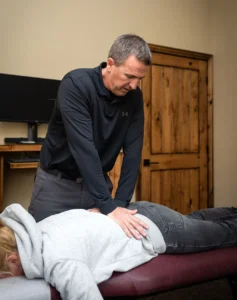
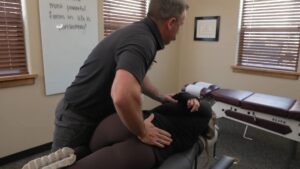
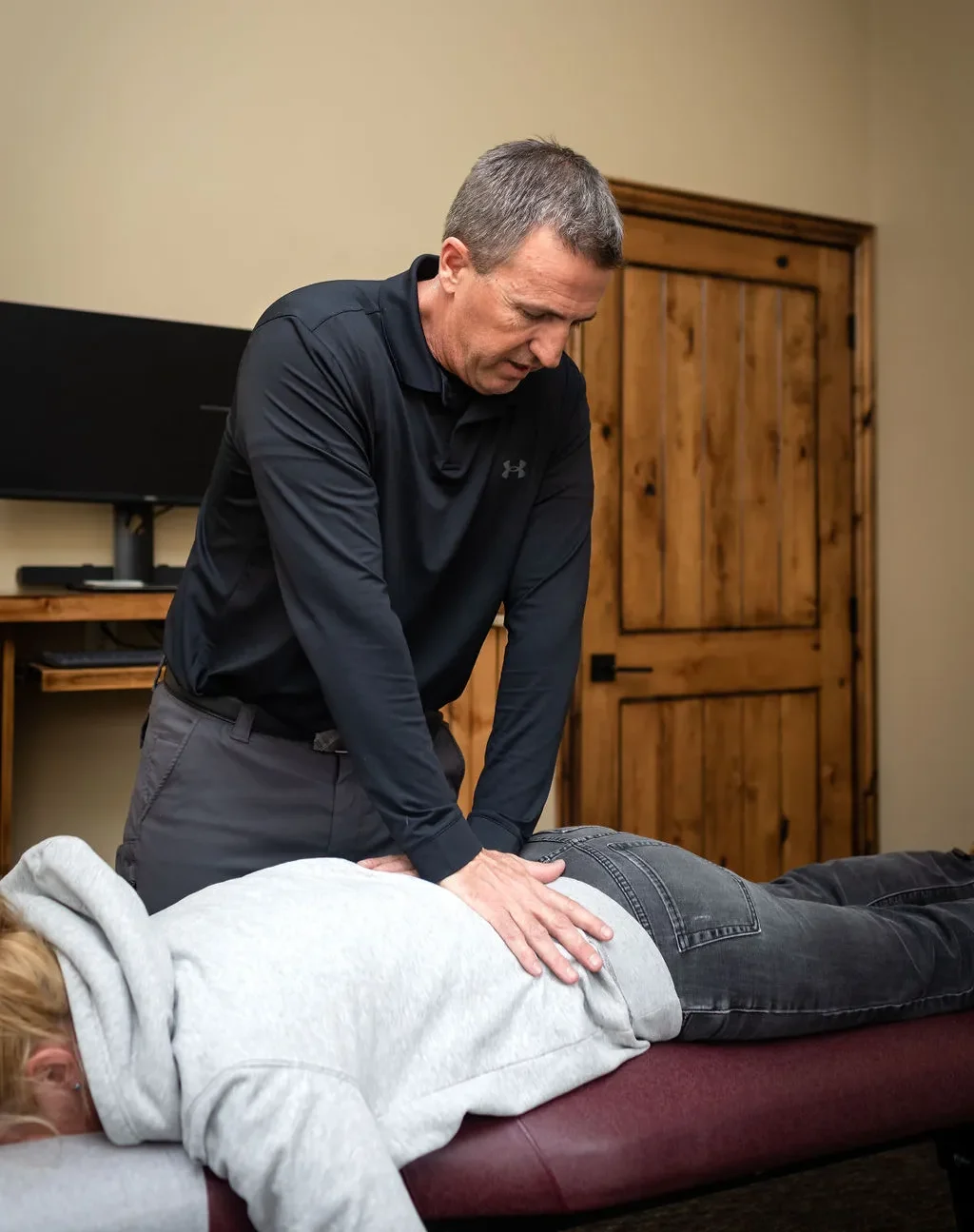
The arthritic facet joints that contribute to stenosis respond to the same chiropractic approach used for facet-driven back pain – maintaining as much mobility as possible, reducing the protective muscle guarding around the affected levels, and keeping the adjacent segments from becoming hypermobile in compensation. Chiropractic adjustments for stenosis patients use low-force or instrument-assisted techniques appropriate for arthritic spines rather than forceful manipulation.
Laser Therapy for Nerve Inflammation
Chronically compressed nerve tissue develops its own inflammatory response that contributes to pain independent of the mechanical compression. Our 30-watt Class IV K-Laser reduces that nerve inflammation and supports neural tissue health – which is why some stenosis patients notice improvement in neurological symptoms like tingling and numbness with laser therapy even when the structural narrowing itself hasn’t changed. Laser therapy is particularly useful for patients whose symptoms are out of proportion to their imaging findings – which is more common than most people realize.
Core and Flexion-Based Exercise
Strengthening the muscles that support the lumbar spine in a flexed position – the abdominals, hip flexors, and lumbar stabilizers – reduces the compressive load on the stenotic canal during walking and standing. This is why flexion-based exercise programs (as opposed to extension-based programs, which narrow the canal further) are the appropriate rehabilitation approach for lumbar stenosis. Dr. Ridgway incorporates specific exercise guidance into every stenosis care plan based on what the patient’s strength and mobility assessment reveals.
When Is Surgery Actually Necessary?
Surgery for spinal stenosis – typically a laminectomy or laminotomy to remove the structures compressing the canal – is genuinely effective and sometimes necessary. The situations that typically warrant surgical evaluation are: progressive neurological deficits (worsening weakness or sensation loss), bowel or bladder dysfunction (a red flag requiring urgent evaluation), and severe functional limitation that hasn’t responded adequately to a sincere trial of conservative care.
The key phrase is “sincere trial.” Many patients told they need surgery haven’t exhausted conservative options – they’ve had some physical therapy and medication but haven’t tried targeted decompression therapy with a protocol designed specifically for their stenosis level and severity. That’s a meaningful gap, and it’s worth filling before committing to surgery.
You can also read more about related conditions we treat including sciatica and back pain that frequently accompany stenosis presentations.
Frequently Asked Questions
Can spinal stenosis be reversed without surgery?
The structural narrowing itself can’t be reversed – the bone spurs and ligament thickening are permanent changes. But the symptoms can be managed very effectively in many patients through decompression and conservative care. Symptom management and maintained function are realistic goals; structural reversal is not – and for most patients, that distinction matters less than being able to walk, hike, and stay active in Durango.
How do I know if my stenosis is severe enough to need surgery?
Severity on imaging doesn’t always correlate with symptom severity. The relevant questions are functional: how far can you walk before symptoms force you to stop, are neurological symptoms progressing, and has conservative care been genuinely exhausted. Dr. Ridgway will give you a straightforward assessment of where your case falls after reviewing your imaging and exam findings.
Is decompression therapy safe for severe stenosis?
It depends on the specifics. Significant spinal instability, severe osteoporosis, or certain post-surgical conditions are contraindications. Dr. Ridgway screens for contraindications carefully before recommending decompression for any patient – not every stenosis presentation is a good candidate, and he’ll tell you if yours isn’t.
If you’ve been told surgery is the next step for spinal stenosis and want to know what conservative care can do first, schedule a consultation at our Durango clinic or call 970-247-5519.