Hip pain is one of the most commonly misattributed complaints in musculoskeletal care. What patients describe as hip pain can be coming from the hip joint itself, the SI joint, the lumbar spine, the surrounding bursa, the tendons attaching at the greater trochanter, or the muscles deep within the pelvis – and the treatment that works depends entirely on which of those structures is actually involved. Getting an accurate diagnosis first is what separates effective hip pain treatment from months of treating the wrong thing.
Where Hip Pain Actually Comes From
The hip is a ball-and-socket joint with a wide range of motion and significant structural complexity. Pain “in the hip” can originate from a surprising number of different sources, each with its own presentation pattern and treatment approach.
Hip Joint Pathology
True hip joint pain – from osteoarthritis, labral tears, or femoroacetabular impingement (FAI) – typically presents as a deep, groin-region ache that’s provoked by hip flexion, internal rotation, and weight-bearing activities. The classic sign is pain with putting on a sock or shoe – activities that require hip flexion and rotation simultaneously. Hip joint pain from arthritis tends to be progressive and present with stiffness that’s worst in the morning.
Greater Trochanteric Bursitis and Gluteal Tendinopathy
Pain on the outer side of the hip – the bony prominence you feel when lying on your side – is most commonly either greater trochanteric bursitis or gluteal tendinopathy (sometimes called lateral hip pain syndrome). This is one of the most frequently misdiagnosed hip conditions and is extremely common in middle-aged active women, though it affects men as well. The pain is provoked by lying on the affected side, crossing the legs, climbing stairs, and running or hiking on camber. It’s often worse at night and can be severe enough to significantly disrupt sleep.
Hip Flexor Strain and Iliopsoas Problems
The iliopsoas – the primary hip flexor – runs from the lumbar spine through the pelvis and attaches to the lesser trochanter of the femur. Tightness, strain, or snapping of the iliopsoas tendon produces anterior hip and groin pain that’s provoked by hip flexion activities – running, cycling, and lifting the knee. In Durango’s active population, iliopsoas problems are common in trail runners and cyclists who train at high volumes without adequate hip flexor recovery work.
Referred Pain From the Lumbar Spine and SI Joint
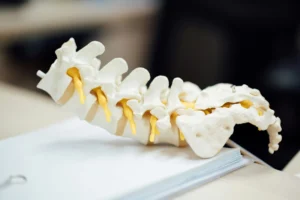
This is the one that catches people off guard. Both lumbar disc herniations and SI joint dysfunction can refer pain into the hip, buttock, and groin in patterns that feel exactly like a hip problem. Patients sometimes have hip pain investigated thoroughly – including imaging – with nothing found, because the actual source is the spine or SI joint above. This is why evaluating the lumbar spine and pelvis alongside the hip itself is essential for accurate diagnosis.
How We Approach Hip Pain at Our Durango Clinic
The first step is always identifying the actual source. Dr. Ridgway’s exam includes orthopedic testing specific to hip joint integrity, labral provocation tests, assessment of hip range of motion and strength, palpation of the surrounding tendons and bursa, and evaluation of the lumbar spine and SI joint for referred pain patterns. If imaging is available, he reviews it – if it’s needed and you don’t have it, he’ll tell you.
From there, the treatment plan is built around what was actually found.
Shockwave Therapy for Gluteal Tendinopathy and Bursitis
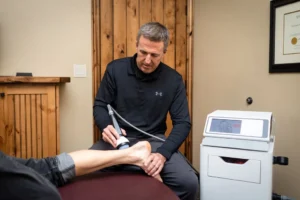
Lateral hip pain from gluteal tendinopathy responds particularly well to shockwave therapy. The same mechanism that makes shockwave effective for Achilles tendinopathy and rotator cuff tendinopathy applies here – the acoustic pressure waves break down disorganized tendon tissue, stimulate collagen repair, and reduce the chronic inflammation that has been stalling the healing process. For greater trochanteric bursitis, radial shockwave reduces the bursal inflammation and the tendon irritation that’s usually driving it. Most patients see meaningful improvement within 4-6 sessions.
Dry Needling for Deep Hip Muscle Trigger Points
The piriformis, deep hip rotators, gluteus medius, and iliopsoas are all common sites for trigger point development in hip pain patients. These trigger points refer pain in patterns that mimic hip joint and bursa pain, and they maintain muscle tension that alters hip mechanics and keeps the underlying problem active. Dry needling with microvolt e-stim reaches these deeper muscles directly – particularly the piriformis and iliopsoas, which are difficult to treat effectively with surface massage alone.
Chiropractic Adjustments for Hip Joint and Pelvic Mechanics
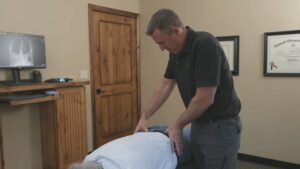
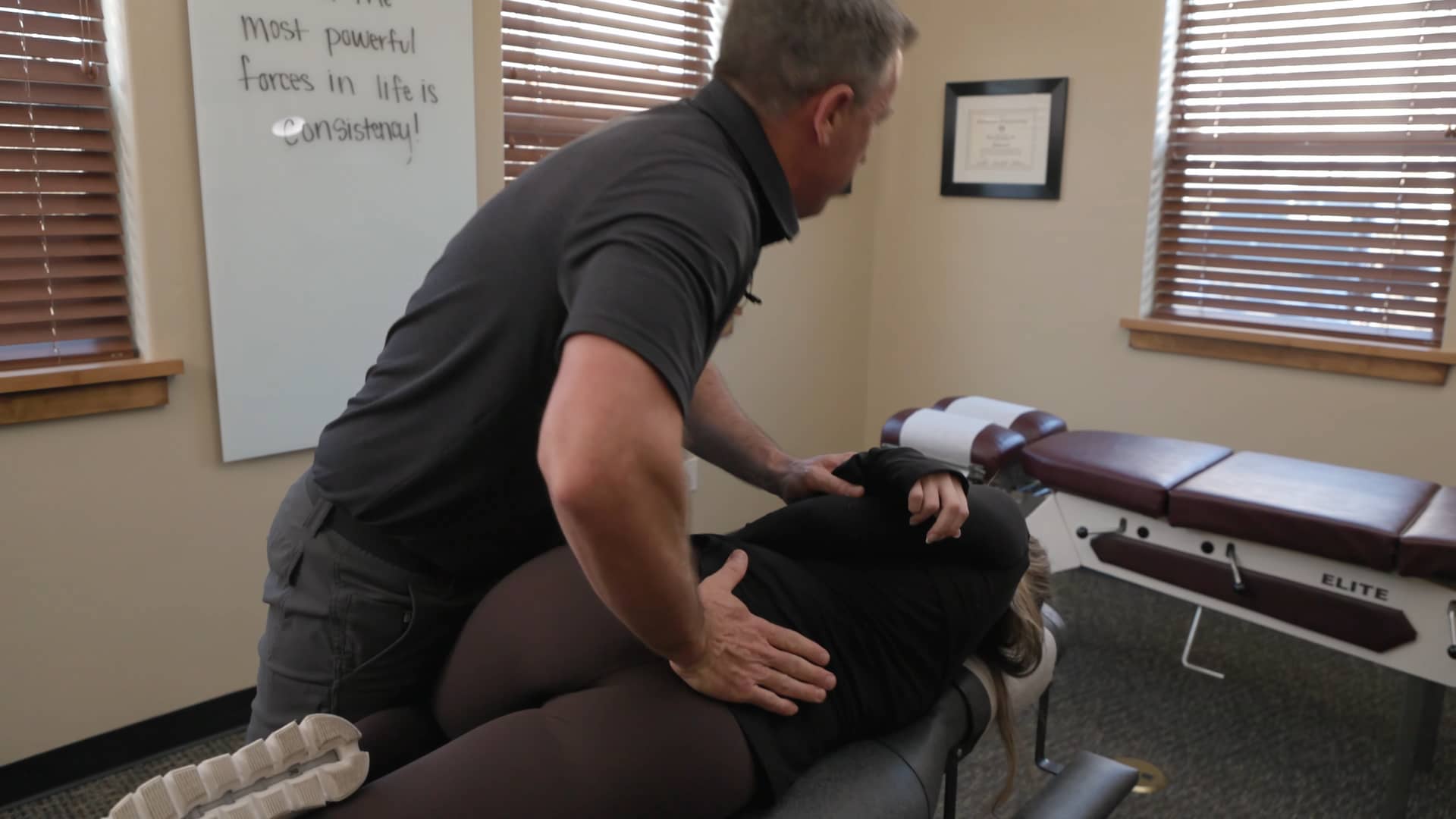
Restricted hip joint mobility and SI joint dysfunction are addressed through chiropractic adjustments specific to those joints. Restoring normal hip mobility reduces the compensatory patterns that develop when the joint isn’t moving freely – particularly the lumbar spine hypermobility and IT band tension that develop when hip internal rotation is restricted. For referred hip pain from lumbar or SI joint sources, treating those structures directly is what resolves the hip symptoms.
Laser Therapy for Hip Joint Inflammation
For hip pain with a significant inflammatory component – arthritic flare-ups, acute bursitis, or recent-onset labral irritation – our 30-watt Class IV K-Laser reduces deep joint inflammation at the cellular level. Laser therapy is applied directly over the hip joint and penetrates deeply enough to reach the joint capsule and surrounding structures, providing anti-inflammatory and tissue-repair effects without medication.
Hip Pain in Durango’s Active Population
Trail runners and hikers deal with hip pain from the repetitive single-leg loading demands of Durango’s terrain – the sustained hip stability work required on steep, uneven trails taxes the gluteal tendons and hip stabilizers significantly. Mountain bikers develop hip flexor tightness and anterior hip pain from sustained riding position. Skiers load the hip through the athletic stance and edge loading demands of groomed and off-piste terrain. Older active adults increasingly deal with hip joint arthritis as the cumulative wear of an active life becomes visible on imaging.
Regardless of the activity that drove the problem, the principle is the same: identifying the actual source and treating it specifically produces better outcomes than generic hip exercises and hope. You can read more about the range of extremity pain conditions we treat at our clinic.
Frequently Asked Questions
How do I know if my hip pain needs imaging before treatment?
Not all hip pain requires imaging before starting conservative treatment. Dr. Ridgway will recommend imaging when the history or exam findings suggest structural pathology – labral tear, significant arthritis, stress fracture – that would change the treatment approach. For most soft tissue and tendon hip pain, treatment can begin based on clinical findings.
Can hip pain be related to my back pain?
Very commonly yes. The lumbar spine, SI joint, and hip joint all influence each other mechanically, and referred pain patterns from lumbar and SI sources frequently present as hip symptoms. Evaluating the full picture rather than just the hip in isolation is how accurate diagnosis happens.
Is surgery ever necessary for hip pain?
For significant labral tears, advanced hip arthritis, or structural impingement that hasn’t responded to conservative care, surgery is sometimes appropriate. But for most hip pain presentations – tendinopathy, bursitis, muscle and soft tissue problems, referred pain – conservative treatment produces good outcomes without surgery. Dr. Ridgway will be straightforward about when a surgical consult makes sense.
If hip pain has been limiting your hiking, biking, or daily activities in Durango, schedule an evaluation at our clinic or call 970-247-5519.