
Shockwave Therapy: Revolutionary Treatment for Stubborn Pain
At Durango Chiropractic, we use both radial and focused shockwave therapy – two distinct devices that target different types of pain for better results than a single system alone.
Benefits of Radial & Focused Shockwave
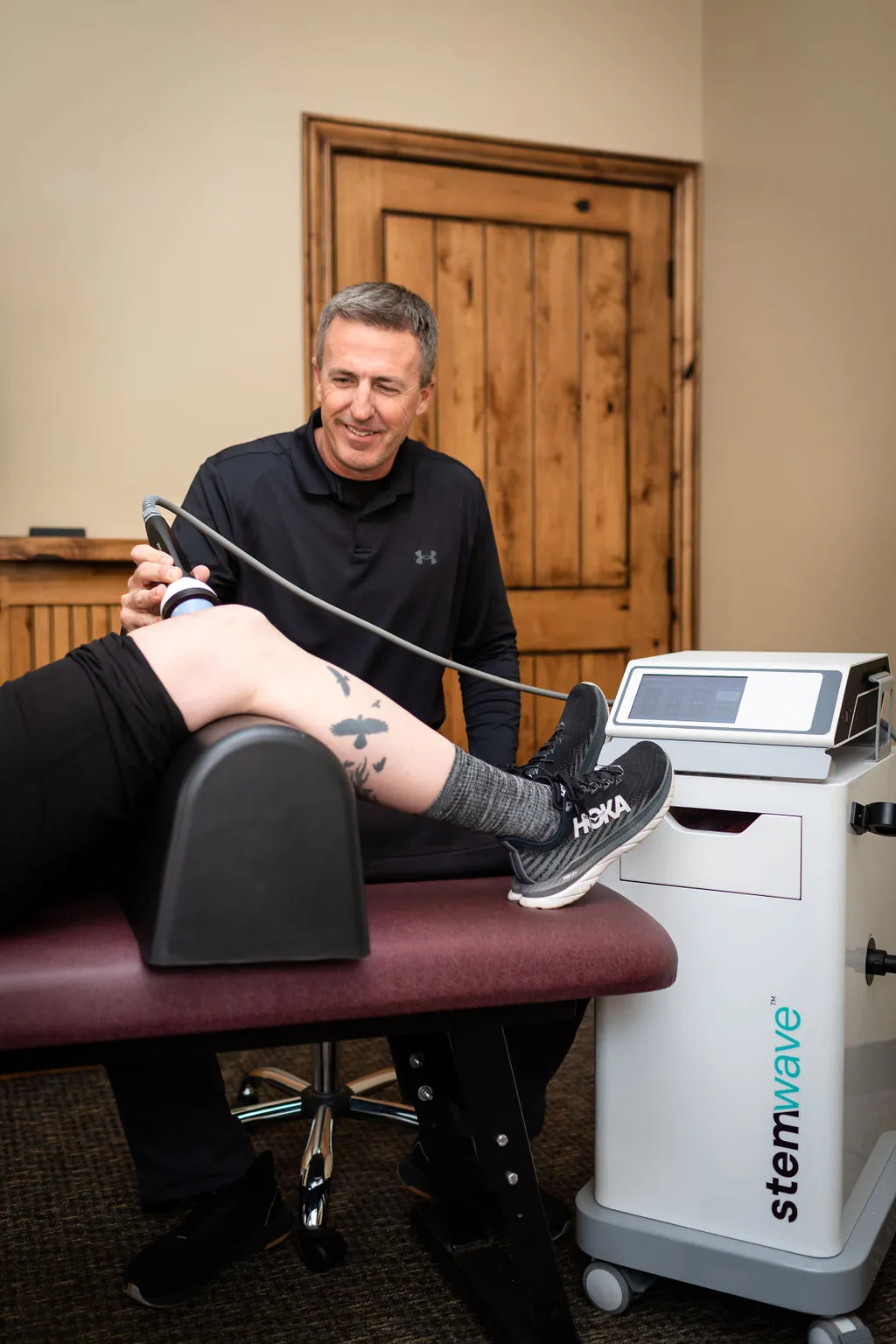
Most clinics offer one type of shockwave therapy. We use both – and knowing when to use each makes a significant difference in your results. Radial shockwave delivers mechanical pressure waves across a broader surface area, making it highly effective for tendon and soft tissue conditions close to the skin. Focused shockwave uses acoustic energy that converges at a precise point deep in the tissue – reaching up to 12cm below the surface – without losing power along the way. In many cases, Dr. Ridgway uses both in the same session to address surface inflammation and the deeper root cause at the same time.
- Breaks down calcifications and scar tissue
- Accelerates tendon, ligament, and bone repair
- Reduces chronic inflammation
- No surgery, no anesthesia, no downtime
Why Patients Choose Shockwave Therapy
Patients come to us with chronic pain that hasn’t responded to rest, physical therapy, or medication. Shockwave therapy works by stimulating the body’s natural healing process – increasing blood flow, promoting collagen production, and breaking down the scar tissue and calcifications that keep injuries from fully healing. Because we have both radial and focused devices, we can match the treatment to the tissue depth and condition rather than applying a one-size-fits-all approach.
Dual-Technology Precision
Radial shockwave covers a wider, more superficial treatment area. Focused shockwave targets deeper structures with pinpoint accuracy. Together, they address injuries at every level – something neither device can do alone.
Breaks Down Chronic Scar Tissue
Both devices deliver acoustic and mechanical energy that disrupts calcifications and long-standing scar tissue, restarting the healing process where other treatments have stalled.
Accelerates Tissue Repair
Shockwave therapy increases blood flow and collagen production, supporting faster recovery for tendons, ligaments, and bone while reducing chronic inflammation and stiffness.
Fast, Non-Invasive Sessions
Sessions are brief with no needles or anesthesia. Most patients return to normal activity the same day.
Proven for Stubborn Pain
Shockwave is commonly selected when conservative care hasn’t worked – particularly for chronic tendon, joint, and soft tissue conditions.
How Shockwave Therapy Works
- Evaluation : Dr. Ridgway identifies the treatment zones based on your condition, symptoms, and the depth of tissue involved.
- Radial : Applied to superficial tendons, fascia, and soft tissue using mechanical pressure waves for broad coverage.
- Focused : Applied to deeper structures using concentrated acoustic energy for precise, high-penetration treatment.
- Combined Approach : For many conditions, both devices are used in the same session to treat the full injury - surface and deep tissue together.
- Treatment Series : Session frequency is customized based on your condition and how your body responds.
Ideal Candidates for Shockwave
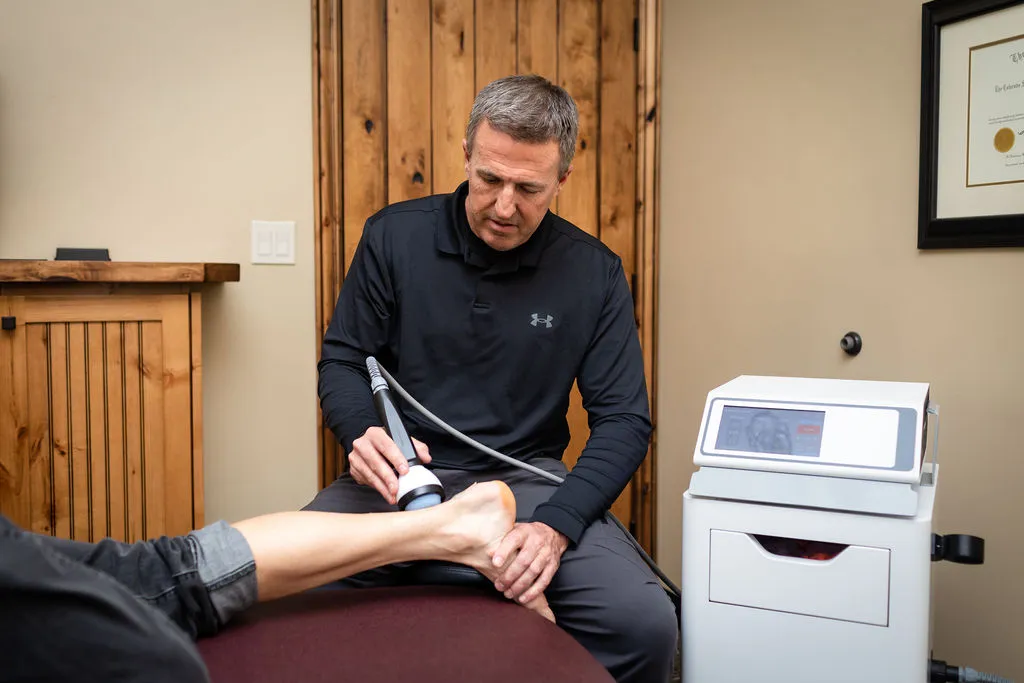
Durango athletes and active individuals with persistent pain that hasn’t responded to rest or PT. There are numerous applications for shockwave therapy as you’ll see:
- Achilles tendinopathy
- Plantar fasciitis and heel pain
- Tennis elbow and lateral epicondylitis
- Calcific shoulder / rotator cuff tendinopathy
- Patellar tendinopathy (jumper's knee)
- Myofascial trigger points
- Non-healing fractures (focused shockwave)
- IT band syndrome
Shockwave FAQs
How does Dr. Ridgway decide between radial and focused shockwave?
Radial is used for surface-level conditions like Achilles tendinopathy and tennis elbow. Focused is used for deeper structures like bone-tendon interfaces and deep calcifications. Often both are used in the same session.
Can both types be used in one visit?
Yes – this is common at our clinic. Combining both in a single session lets us treat surface inflammation and the deeper root cause at the same time.
What conditions respond best to shockwave therapy?
Chronic tendon conditions, plantar fasciitis, calcific shoulder, myofascial trigger points, and stubborn soft tissue injuries that haven’t responded to rest or PT.
How many sessions will I need?
Most patients see meaningful improvement within 3-6 sessions. Dr. Ridgway will give you a realistic estimate after your evaluation.
Is shockwave therapy painful?
Radial shockwave can cause some discomfort over sensitive tendons. Focused shockwave is generally more comfortable. Most patients tolerate sessions well.