If your sciatica keeps coming back after treatment, the treatment isn’t reaching the actual cause. Recurring sciatica almost always means one of two things: the disc herniation or spinal stenosis compressing the nerve root hasn’t been adequately addressed, or there’s a muscle guarding component – typically piriformis or deep hip rotator tightness – that’s keeping the sciatic nerve irritated even when the spine looks fine on imaging. In most cases it’s both, and addressing only one while ignoring the other is exactly why so many sciatica patients end up in the same cycle of flare, treatment, temporary relief, and flare again.
What Sciatica Actually Is
Sciatica is nerve pain originating from the sciatic nerve – the largest nerve in the body, which runs from the lower lumbar spine through the buttock and down the back of each leg. When the nerve is compressed or irritated, it produces the characteristic symptom pattern: pain, burning, tingling, or numbness that radiates from the lower back through the buttock and into the leg, sometimes all the way to the foot.
The compression can come from several sources. A herniated or bulging disc at L4-L5 or L5-S1 is the most common structural cause – the disc material pushes directly against the nerve root as it exits the spine. Spinal stenosis – narrowing of the spinal canal – can compress the nerve roots more broadly. And piriformis syndrome, where the piriformis muscle deep in the buttock compresses the sciatic nerve as it passes beneath or through it, produces identical symptoms with no disc involvement at all.
The treatment that works depends entirely on which of these is driving the symptoms – which is why imaging and a thorough exam matter before deciding on an approach.
Why Sciatica Keeps Coming Back for So Many Patients
The most common reason sciatica recurs is incomplete treatment. Rest and anti-inflammatories bring the acute flare down, but the disc herniation that caused it is still there. The first time the patient lifts something awkward, sits for a long flight, or has a hard day on the trail, the nerve compression returns and so does the pain.
Chiropractic adjustments alone help many sciatica patients, but for confirmed disc involvement they have limits. Adjustments restore spinal mobility and reduce muscle guarding effectively, but they don’t directly create the negative intradiscal pressure needed to retract herniated disc material away from the nerve root. That’s a different mechanism requiring a different tool.
Muscle guarding is the other piece that gets missed. After a painful sciatica episode, the deep hip rotators and piriformis develop protective tension around the affected nerve. That tension doesn’t always release on its own even after the disc pressure is reduced – which is why some patients feel significantly better structurally on imaging but still have persistent buttock and leg symptoms.
How We Treat Recurring Sciatica in Durango
The approach at our clinic is built around addressing both the disc component and the muscle component simultaneously – because leaving either one untreated is what drives recurrence.
DRX9000 Spinal Decompression for Disc-Driven Sciatica
For sciatica caused by a herniated or bulging disc, spinal decompression therapy with the DRX9000 is the most targeted non-surgical intervention available. The DRX9000 applies computerized gentle traction at precise angles specific to the affected disc level, creating negative intradiscal pressure that helps retract the herniated material away from the nerve root.
Dr. Ridgway personally reviews your imaging on the first visit and sets the traction angles and pressure levels based on which disc level is involved and the direction of the herniation. The sessions themselves are passive and consistent – patients lie back while the table does the work – and progress is tracked through straight leg raise testing, lumbar flexion measurements, and symptom behavior at each visit.
This is fundamentally different from manual traction or the stretching you can do at home. The DRX9000 maintains a precise, sustained distraction force that creates the intradiscal pressure change needed for disc retraction – something that can’t be replicated manually.
Dry Needling for Piriformis and Deep Hip Rotator Guarding
The piriformis and deep hip rotators are almost universally involved in sciatica presentations, regardless of whether the primary driver is disc-based or muscle-based. These muscles sit directly adjacent to the sciatic nerve and develop trigger points and protective tension in response to nerve irritation – which then perpetuates the irritation in a self-reinforcing cycle.
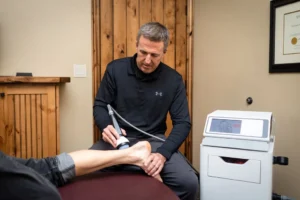
Dry needling with microvolt e-stim is the most direct way to release trigger points in the piriformis and deep hip rotators. For disc-driven sciatica patients, cervical or lumbar needling to reduce the guarding around the spine often makes decompression sessions more effective – the traction works through a more relaxed tissue environment when the protective muscle tension has been reduced first. For piriformis syndrome specifically, needling the piriformis directly is the primary treatment tool.
Chiropractic Adjustments for Spinal Mobility
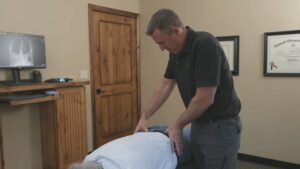
Restricted lumbar and SI joint mobility almost always accompanies sciatica, regardless of the primary cause. Chiropractic adjustments restore normal movement to those restricted segments, reduce the muscle compensation patterns that develop around a painful spine, and support the overall recovery process. For most sciatica patients, adjustments are part of the care plan alongside decompression and dry needling – not a standalone treatment.
K-Laser for Nerve Inflammation
When sciatica involves significant nerve root inflammation – which most acute cases do – our 30-watt Class IV K-Laser reduces inflammation and supports nerve tissue healing at the cellular level. Laser therapy is particularly useful in the early stages of a sciatica flare when pain levels are high, and for persistent nerve symptoms like tingling or numbness that continue after disc pressure has been relieved.
Sciatica in Durango’s Active Population
Durango’s outdoor lifestyle creates specific sciatica triggers worth knowing about. Long days in the backcountry with a heavy pack compress the lumbar discs vertically with every step – a full day in the Weminuche can push a marginally compromised disc into a symptomatic flare. The sustained hip flexion of mountain biking loads the posterior lumbar structures in a way that provokes disc herniations at L4-L5 and L5-S1 specifically. And the rotational demands of skiing at Purgatory stress the SI joint and piriformis in ways that can trigger sciatica even without disc involvement.
Understanding what activity pattern triggered the episode helps Dr. Ridgway identify which structures are involved and design the treatment plan accordingly. You can read more about the condition on our sciatica pain page.
How Long Until It Resolves?
For acute sciatica from a recent disc herniation, many patients see meaningful improvement within 2-4 weeks of a combined decompression and needling protocol. Chronic sciatica that has been recurring for months or years takes longer – typically 6-10 weeks of consistent treatment – because there are accumulated tissue changes in both the disc and the surrounding musculature that need time to resolve.
The most important predictor of outcome is whether the treatment actually addresses the driving cause. Sciatica that gets a complete evaluation and a targeted treatment plan responds very differently from sciatica that gets generic back treatment and a hope that it resolves on its own.
Frequently Asked Questions
How do I know if my sciatica is from a disc or from the piriformis?
The history and exam findings help differentiate them. Disc-driven sciatica is often provoked by sitting, forward bending, and activities that increase intradiscal pressure. Piriformis syndrome tends to be provoked more by hip rotation and direct pressure on the buttock. Imaging helps confirm disc involvement. Dr. Ridgway will walk through the findings with you after the exam.
Is sciatica something I’ll always have to manage?
Not necessarily. Many patients resolve sciatica completely with the right treatment approach and don’t have recurring episodes. The key is identifying and addressing the root cause – whether that’s disc degeneration, movement patterns, or activity load – rather than just managing flares as they come.
Can I keep hiking or biking with sciatica?
It depends on severity and what’s driving it. Some activities are provocative for sciatica and others aren’t. Dr. Ridgway will give you specific guidance on what’s appropriate during treatment – the goal is always to keep you as active as possible while the underlying problem is being addressed.
If sciatica keeps pulling you off Durango’s trails, schedule an evaluation at our clinic or call 970-247-5519 to talk through your options with Dr. Ridgway.