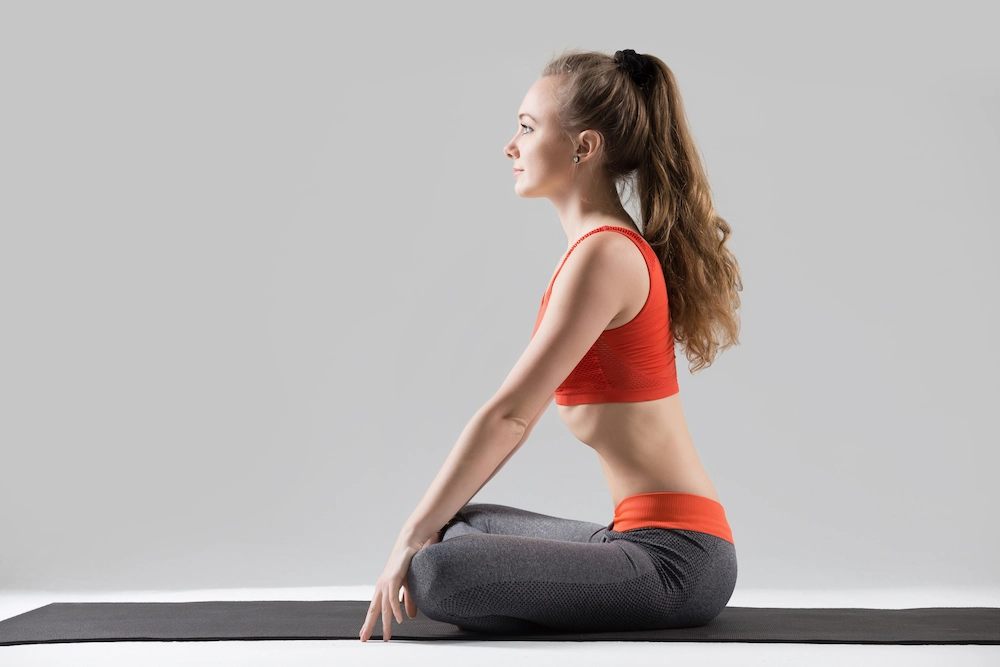
Poor posture doesn’t just cause back and neck pain – it limits how well your body moves, how much force your muscles can generate, and how efficiently you recover between activities. For Durango’s active residents, that means bad posture isn’t just a desk-worker problem. It affects trail runners, mountain bikers, skiers, and anyone who’s been carrying the same compensations through years of activity. The good news is that most posture problems are correctable with the right combination of spinal work and targeted movement retraining.
What Bad Posture Actually Does to Your Body
Posture affects far more than appearance. When the spine is out of its optimal alignment, the muscles that support it have to work harder to hold you upright – which means they’re pre-fatigued before any activity even begins. Joint surfaces that should be loaded evenly start taking asymmetrical stress. Nerves that exit the spine in tight, compressed spaces get irritated more easily. And over time, the soft tissue adapts to the compensated position, making it progressively harder to return to neutral.
The three most common postural patterns we see at our Durango clinic are forward head posture, rounded shoulders, and anterior pelvic tilt. They often occur together, and each one creates its own downstream effects on pain, performance, and injury risk.
Forward Head Posture
For every inch the head drifts forward from its neutral position over the shoulders, the effective weight on the cervical spine increases by roughly 10 pounds. A head that sits two inches forward – which is common in people who spend significant time at screens – adds about 20 pounds of extra load to the neck and upper back constantly. The suboccipital muscles at the base of the skull shorten and tighten, the deep cervical flexors weaken, and the upper trapezius becomes chronically overloaded trying to hold the head up.
For mountain bikers, this is compounded by the extended neck position required to look up the trail from an aggressive riding position. Hours in that posture, repeated over hundreds of rides, accelerates the forward head pattern significantly.
Rounded Shoulders
Rounded shoulders – where the shoulders roll forward and the thoracic spine flexes into a kyphotic curve – are driven by tight pectorals, a weak posterior rotator cuff, and inhibited mid-scapular muscles. The shoulder joint sits in a poor mechanical position, which increases impingement risk and reduces the strength available for overhead and pushing movements. For paddlers, climbers, and skiers planting poles, rounded shoulders directly affect both performance and injury risk.
Anterior Pelvic Tilt
Anterior pelvic tilt – where the pelvis tips forward and the lower back arches excessively – is almost universal in people with tight hip flexors and weak glutes. It compresses the lumbar facet joints, shortens the lumbar paraspinal muscles, and puts the hamstrings in a chronically lengthened position that reduces their ability to generate force. Trail runners with anterior pelvic tilt are predisposed to hamstring strains, low back pain on long runs, and reduced running economy.
How We Correct Posture at Our Durango Clinic
Posture correction isn’t just telling someone to sit up straight. That advice doesn’t work because the postural pattern is held in place by shortened soft tissue, restricted joints, and movement habits that have been reinforced over years. Correcting it requires addressing all three – and that’s where combining chiropractic care with targeted exercise makes the difference.
Spinal Adjustments to Restore Joint Mobility
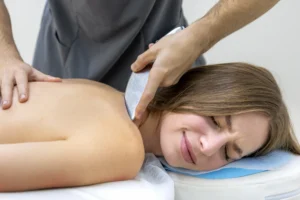
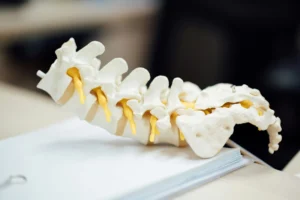
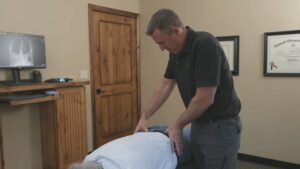
Restricted joint segments in the cervical and thoracic spine physically limit the range of motion available for good posture. A cervical spine that can’t extend fully can’t support neutral head position. A thoracic spine locked in flexion can’t extend into the upright posture needed to take the load off the neck and shoulders. Chiropractic adjustments restore mobility to those restricted segments – which is the necessary first step before any postural retraining can actually take hold.
Without restoring joint mobility first, posture exercises are fighting against structural restriction. With it, the exercises work because the body now has the range available to use them.
Soft Tissue Work for Shortened Muscles
The muscles that have shortened and adapted to the compensated posture need to be lengthened before the opposing muscles can effectively pull the body back toward neutral. Tight pectorals holding the shoulders forward, short hip flexors maintaining anterior pelvic tilt, and contracted suboccipitals locking the head in forward position all need direct treatment.
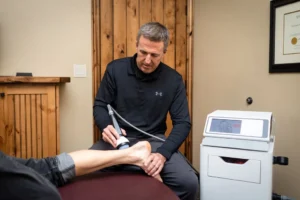
Depending on what’s found, Dr. Ridgway uses a combination of instrument-assisted soft tissue work, dry needling for trigger points in the shortened muscles, and sports massage to address the broader fascial restrictions that maintain the postural pattern.
Targeted Activation Exercises
Once the restricted joints are moving and the shortened muscles have been released, the work shifts to activating the muscles that have been inhibited by the compensation pattern. Deep cervical flexors for forward head posture. Mid-scapular stabilizers and posterior rotator cuff for rounded shoulders. Glutes and deep abdominals for anterior pelvic tilt.
These aren’t generic core exercises. Dr. Ridgway gives patients specific movements that train the right muscles in the right positions – progressions that start where the patient’s current strength and coordination actually are, not where they should theoretically be. The exercises are built into the care plan and adjusted as the postural pattern improves.
Posture and Athletic Performance
The connection between posture and performance is direct and often underappreciated by active patients. Here’s how it plays out in Durango’s most common activities.
For trail runners, neutral pelvic alignment improves running economy, reduces hamstring injury risk, and takes pressure off the lumbar spine on long efforts. For mountain bikers, thoracic extension mobility reduces neck strain in the riding position and improves power transfer through the core. For skiers, good thoracic mobility and hip alignment improve edge control and reduce the lumbar compression that drives back pain during ski days at Purgatory.
Addressing posture proactively – before an injury forces the issue – is one of the highest-return investments an active Durango resident can make in their long-term performance and durability. You can read more about neck pain and back pain conditions that are directly connected to postural dysfunction.
How Long Does Posture Correction Take?
That depends on how long the pattern has been present and how consistently the exercises are done. Postural habits that have been in place for decades take longer to change than ones that developed more recently. Most patients start noticing meaningful improvement in pain and movement within 4-6 weeks of consistent treatment and exercise. Full postural remodeling takes longer – typically 3-6 months of progressive work.
The good news is that improvement tends to be self-reinforcing. As posture improves, the pain that was driven by the compensation pattern decreases, which makes it easier to maintain the corrected position, which reduces pain further. Getting the initial momentum going is the hard part.
Frequently Asked Questions
Can posture actually be corrected in adults, or is it too late?
It can be corrected at any age, though the timeline varies. Joint mobility, soft tissue length, and movement patterns are all adaptable throughout life. The key is addressing all three components – not just doing exercises while the underlying restrictions remain in place.
Do I need to stop my activities during posture correction?
No. Posture correction is integrated into your normal routine, not a replacement for it. Dr. Ridgway will give you guidance on activity modifications where relevant – for example, handlebar or saddle adjustments for cyclists that reduce the postural demand during rides while the correction work is in progress.
Is posture correction covered by insurance?
The chiropractic component typically is. Call our office and we can help you sort out your specific coverage before your first visit.
If posture problems have been holding back your performance or driving chronic pain in Durango, reach out to our clinic or call 970-247-5519 to schedule an evaluation with Dr. Ridgway.