
Back pain after a day on Durango’s trails is your body sending a signal – and what that signal means depends heavily on where you feel it, when it started, and how it behaves. Some post-trail back pain is normal muscle fatigue that resolves with rest. Some of it points to something structural that will keep coming back until it’s properly addressed. Knowing the difference matters, especially if you’re trying to stay active through a full season of hiking, biking, and skiing.
The Difference Between Muscle Fatigue and Something More
After a long day on the Colorado Trail or a hard descent on the Hermosa Creek singletrack, some back soreness is expected. Your paraspinal muscles have been working hard to stabilize the spine through hours of varied terrain and repeated impact. That kind of diffuse, bilateral soreness that eases with rest over 24-48 hours is typically just muscle fatigue – normal and self-limiting.
What’s worth paying attention to is back pain that doesn’t follow that pattern. Specifically:
- Pain that’s sharp or located on one side rather than diffuse and bilateral
- Pain that gets worse over the following day rather than better
- Pain that radiates into the buttock, hip, or down the leg
- Pain with numbness, tingling, or weakness in the leg or foot
- Pain that returns consistently after similar activities, even at lower intensity
- Back pain that’s worse in the morning and takes time to loosen up
Any of those patterns is telling you something beyond normal post-activity soreness. They point to disc involvement, joint dysfunction, or nerve irritation that isn’t going to resolve on its own with more rest and ibuprofen.
Why Durango’s Terrain Creates Specific Back Pain Patterns
Flat, even terrain is relatively easy on the lumbar spine. What Durango throws at you is different. Steep, sustained descents load the lumbar discs in flexion for extended periods. Technical off-camber singletrack requires constant spinal stabilization under load. Long ascents with a heavy pack compress the lumbar spine vertically with every step. And the multi-day nature of many Durango backcountry trips in the Weminuche or the San Juan Mountains means the spine doesn’t get adequate recovery between loads.
Mountain bikers deal with a specific combination of sustained lumbar flexion from the riding position and high-frequency vibration transmitted through the frame – both of which accelerate disc wear and fatigue the posterior spinal musculature. Hikers and trail runners tend to see more facet joint and disc compression patterns from vertical load. Each activity creates a recognizable pattern once you’ve treated enough of them.
What’s Usually Driving Post-Trail Back Pain
There are a few common structural culprits that account for the majority of recurring back pain in active Durango patients.
Facet Joint Irritation
The facet joints are small paired joints at the back of each vertebral level that guide spinal movement and bear load. Sustained flexion activities like hiking and biking decompress them somewhat, but transitions into extension – standing up after a long ride, straightening out after a steep descent – can compress and irritate them, especially if they’ve been restricted or inflamed.
Facet-mediated pain is typically unilateral, located directly over the joint, and provoked by extension and rotation. It responds well to chiropractic adjustments that restore normal joint movement and reduce the protective muscle guarding that develops around irritated facets.
Lumbar Disc Involvement
The lumbar discs absorb enormous compressive and shear force during trail activities. In patients who already have some disc degeneration or a prior herniation, a long trail day can push a disc that was managing fine into a symptomatic flare. In younger patients, repeated high-load activities without adequate recovery can accelerate the disc wear process over time.
Disc-related back pain is often centralized, deep, and accompanied by stiffness. When there’s nerve involvement – leg pain, numbness, or tingling – the disc is pressing on a nerve root and the treatment needs to address that directly. Spinal decompression with the DRX9000 is the most targeted non-surgical option for disc-mediated nerve compression, and it’s available at our Durango clinic.
Muscle Trigger Points and Tension
The quadratus lumborum, the paraspinals, and the gluteal muscles are all common sites for trigger point development in active patients. These aren’t just sore muscles – trigger points are specific hypersensitive spots within the muscle that refer pain, limit movement, and stay contracted even at rest. They don’t resolve with foam rolling alone and they don’t disappear between trail days.
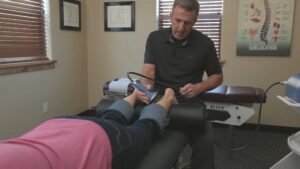
Dry needling with microvolt e-stim is the most direct way to release those trigger points. For patients whose back pain has a significant muscle component, needling combined with adjustments gets faster and more durable results than either approach alone.
SI Joint Dysfunction
The sacroiliac joint – where the sacrum meets the ilium on each side of the pelvis – is a common source of low back and buttock pain that often gets attributed to the lumbar spine. SI joint dysfunction presents as pain just below and to one side of the waist, sometimes with referral into the buttock or upper thigh. It’s provoked by single-leg loading, transitions from sitting to standing, and asymmetrical activities like trail running on banked surfaces.
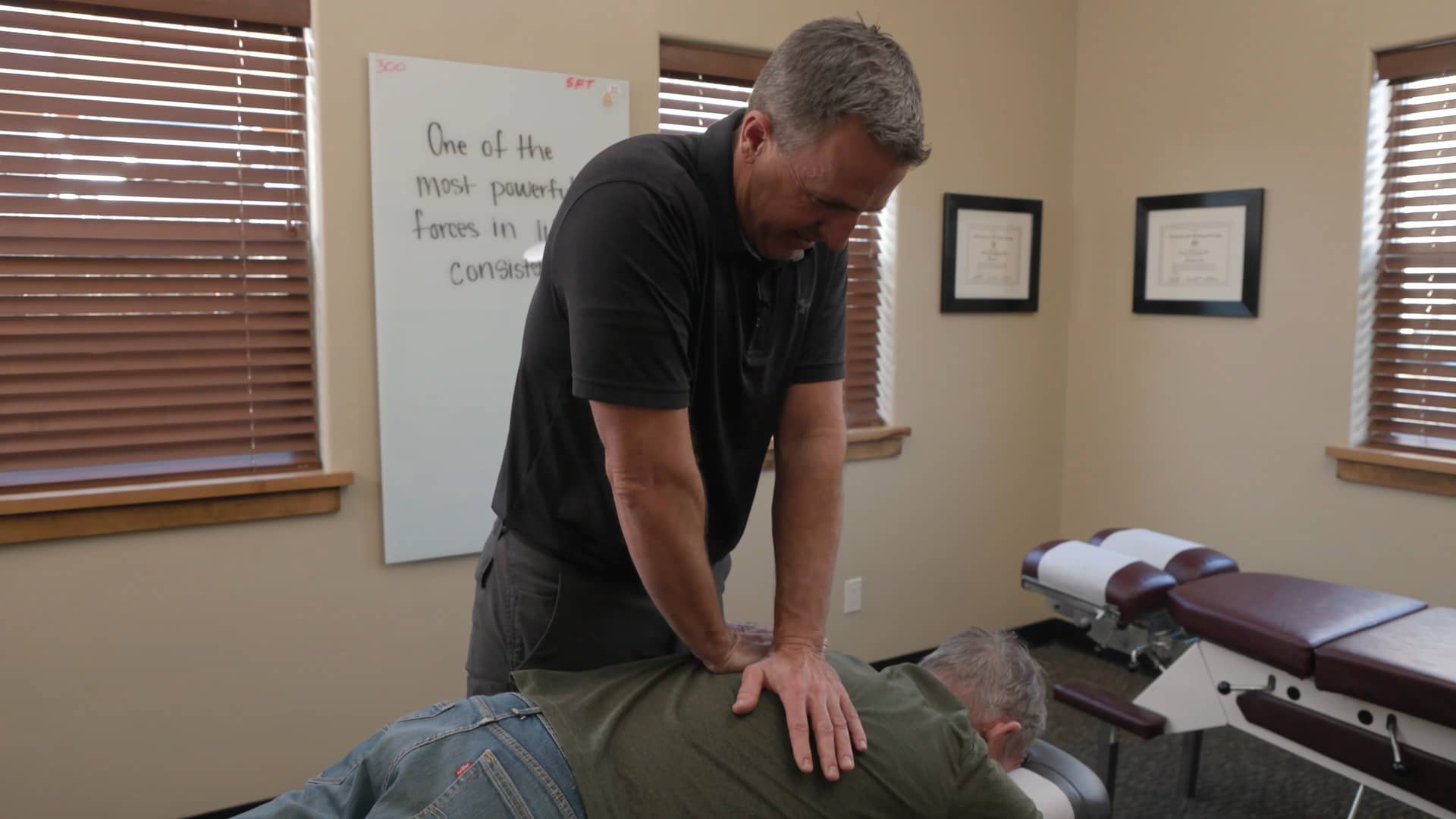
Chiropractic adjustment of the SI joint and pelvis is highly effective for this pattern, and it’s often missed when the lumbar spine gets all the diagnostic attention.
How We Approach Back Pain at Our Durango Clinic
The starting point is always an accurate diagnosis. Back pain is a symptom, not a diagnosis – and the treatment that works for facet joint irritation is different from what works for disc herniation, which is different again from what works for SI joint dysfunction or muscle trigger points.
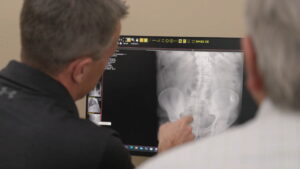
Dr. Ridgway’s first-visit exam identifies which structures are involved through a combination of postural assessment, orthopedic testing, range of motion evaluation, and hands-on palpation. If you have existing imaging, he reviews it. If imaging is needed and you don’t have it, he’ll tell you.
From there, the treatment plan is built around what was actually found. For most active Durango patients, that involves a combination of chiropractic adjustments to restore joint mobility, dry needling or sports massage for the muscle component, and decompression or laser therapy where disc involvement or inflammation is part of the picture. Not every patient needs all of those – the plan is based on your specific findings, not a standard protocol.
Staying Active During Treatment
One of the most common questions Dr. Ridgway gets from Durango patients is whether they have to stop their activities during treatment. The honest answer is: it depends on what’s going on and how severe it is. For most presentations, the goal is to keep you as active as possible while the underlying problem is being addressed – because telling an active Durango resident to stop hiking, biking, or skiing for two months is rarely practical or necessary.
What usually changes is intensity and volume for a period, combined with specific guidance on movements or positions to avoid while the tissue is healing. Dr. Ridgway will give you a clear, practical set of guidelines based on your specific situation – not a generic “rest and don’t do anything fun” recommendation.
When to Come In Rather Than Wait
Most muscle soreness after a hard trail day resolves within 48-72 hours. If yours doesn’t – or if it follows any of the patterns described earlier in this post – that’s the signal to get an evaluation rather than wait another few weeks hoping it resolves on its own. Earlier treatment consistently produces faster outcomes and prevents the kind of chronic tissue changes that make back pain harder to resolve the longer it goes untreated.
Frequently Asked Questions
How do I know if my back pain is a disc problem or a muscle problem?
The history and exam findings usually make this clear. Disc problems often come with morning stiffness that takes time to loosen, pain that’s provoked by sitting and forward bending, and sometimes radiating symptoms into the leg. Muscle problems tend to be more activity-related and localized. The distinction matters for treatment – which is exactly why an exam is more useful than self-diagnosis.
Is it safe to get a chiropractic adjustment when my back is acutely flared?
In most cases, yes – with appropriate technique. Dr. Ridgway uses instrument-assisted or low-force adjustments when the area is acutely painful, avoiding the kind of firm manipulation that’s uncomfortable in an acute flare. Getting treatment early in an acute episode typically shortens the recovery timeline.
My back pain always comes back after long trail days. Is that normal?
Recurring back pain triggered by the same activity pattern is a sign that the underlying structural issue hasn’t been resolved – just suppressed between episodes. That cycle is worth breaking with a proper evaluation and targeted treatment rather than managing each flare as it comes.
If back pain has been affecting your time on Durango’s trails, schedule an evaluation at our clinic or call 970-247-5519.