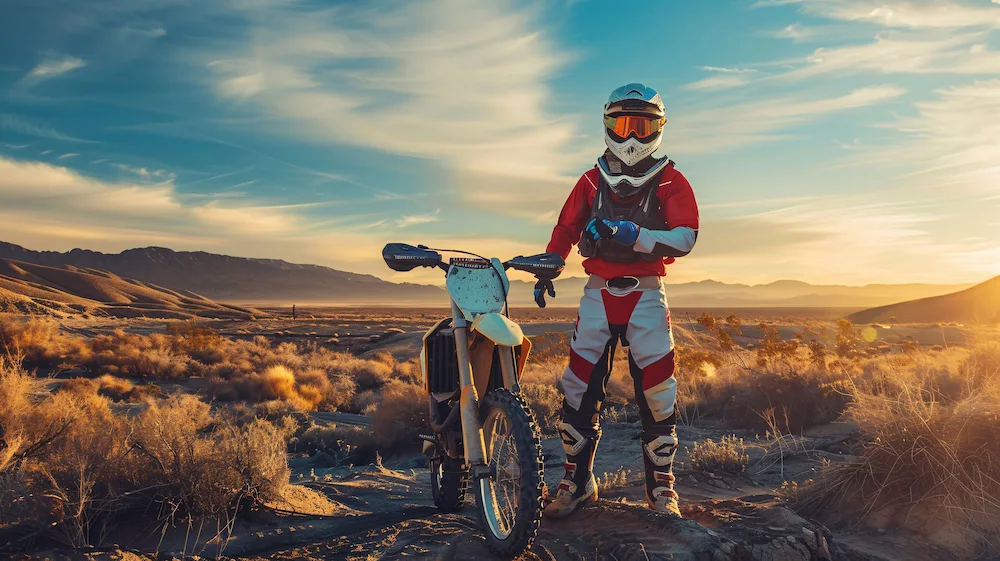
Mountain biking in Durango is serious. Between Hermosa Creek, the Horse Gulch trail system, Dalla Mountain Park, and the backcountry routes into the San Juan Mountains, riders here are logging technical miles at a level that produces real injuries – not just occasional soreness. After years of treating Durango’s mountain biking community, there are patterns we see consistently, and most of them respond well to the right combination of therapies when caught early enough.
Why Mountain Biking Is Hard on the Body
Mountain biking creates a specific injury profile that’s different from road cycling or most other endurance sports. The sustained flexed position on the bike loads the lumbar spine and hip flexors constantly. The vibration transmitted through the frame and handlebars stresses the cervical spine, wrists, and elbows over long rides. Technical terrain requires rapid stabilization responses from muscles that may already be fatigued. And crashes – even minor ones – create acute soft tissue injuries that can become chronic if they’re not treated properly.
Add to that the fact that most serious Durango riders are also hiking, running, or skiing, and the cumulative load on their bodies is substantial. The injuries we treat in mountain bikers often have roots in other activities, and the bike just happens to be what finally triggers the symptom.
The Injuries We See Most
Low Back Pain
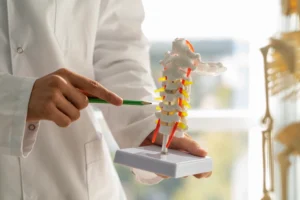
Low back pain is the most common complaint we see in mountain bikers, and it makes sense biomechanically. The sustained hip flexion of the riding position keeps the lumbar spine in flexion for hours, compressing the anterior disc and loading the posterior facet joints asymmetrically. Add trail vibration and the repeated micro-stabilization demands of technical terrain, and the lumbar spine takes a significant cumulative beating over a full riding season.
For riders with existing disc issues, long rides can trigger flares that take weeks to settle. For others, the pattern is nagging stiffness that builds through the season and eventually becomes limiting. Back pain in mountain bikers almost always has multiple contributors – restricted lumbar joints, tight hip flexors, weak glutes, and sometimes disc involvement – which is why a single-modality treatment approach rarely gets durable results.
Neck Pain and Cervicogenic Headaches
The sustained cervical extension required to look up the trail from an aggressive riding position is one of the most consistent postural stressors we see in riders. Hours in that position compresses the posterior cervical joints, overloads the suboccipital muscles, and drives trigger point development in the upper trapezius and levator scapulae. Over time it produces chronic neck pain and, in many riders, cervicogenic headaches that trace directly to the cervical spine tension rather than any systemic cause.
Cervical adjustments, dry needling of the upper cervical and shoulder girdle musculature, and bike fit adjustments to reduce the neck extension demand are all part of how we address this pattern.
IT Band Syndrome
IT band syndrome in cyclists comes from the repetitive hip flexion and extension of pedaling, combined with saddle height issues that change the hip angle at the top of the pedal stroke. Riders who also run or hike are especially prone because the cumulative IT band loading from multiple activities adds up quickly. The lateral knee pain that characterizes IT band syndrome can sideline a rider from both the bike and the trail if it’s not addressed. We covered this in detail in a separate post – the short version is that dry needling and shockwave therapy together are the most effective combination for getting past the foam-rolling plateau.
Lateral Elbow Pain (Tennis Elbow)
Sustained grip tension on the handlebars, repeated braking on technical descents, and vibration transmission through the frame make lateral epicondylitis extremely common in mountain bikers. It develops gradually and is often attributed to “just soreness” until it’s severe enough to limit braking and steering. Shockwave therapy for the tendon attachment combined with dry needling for the forearm extensor trigger points addresses both the structural degeneration and the muscle tension driving it.
Wrist and Hand Pain
Wrist pain in mountain bikers typically involves either the triangular fibrocartilage complex on the ulnar side of the wrist or compression neuropathy from sustained grip and vibration. Numbness and tingling in the hands – often attributed to gloves or grip position – can indicate ulnar or median nerve compression that deserves evaluation. Chiropractic assessment of the wrist joints, combined with soft tissue work and ergonomic guidance on grip and handlebar setup, addresses most wrist and hand presentations without needing anything more invasive.
Shoulder Injuries from Falls
Crashes onto an outstretched arm or directly onto the shoulder produce AC joint sprains, rotator cuff strains, and occasionally clavicle fractures in mountain bikers. For soft tissue shoulder injuries that aren’t healing on the expected timeline, shockwave therapy and laser therapy accelerate tissue repair and reduce the chronic inflammation that stalls healing after acute injuries. Suspected fractures get appropriate imaging and referral first – that’s always the starting point for significant crash injuries.
Hip Flexor Tightness and Strain
The hip flexors – particularly the iliopsoas – are in a shortened position for the entire time you’re on the bike. Over a full riding season, chronic hip flexor tightness becomes one of the most consistent findings in regular mountain bikers. It contributes to anterior pelvic tilt, lumbar compression, and reduced hip extension that affects both riding efficiency and running performance for those who do both. Dry needling the iliopsoas and hip flexor complex, combined with stretching and activation work for the opposing glutes, is the most effective way to address this pattern.
Bike Fit and Injury Prevention
A significant portion of the mountain biking injuries we treat have a bike fit component. Saddle height that’s too low increases knee flexion at the bottom of the pedal stroke and loads the patellar tendon excessively. Handlebar position that requires sustained cervical extension drives neck pain. Reach that’s too long or too short changes how the lumbar spine is loaded on the bike. None of these are things that show up immediately – they accumulate over hundreds of hours of riding and eventually become pain.
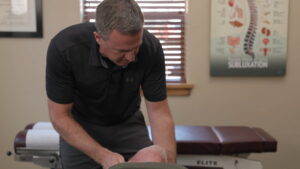
Dr. Ridgway discusses bike fit as part of the evaluation for mountain biking injuries when it’s relevant. It’s not a formal bike fitting service, but identifying obvious setup issues that are contributing to the injury pattern is part of addressing the root cause rather than just the symptoms.
Keeping You on the Trail
The goal with every mountain biking injury is to get you back on the trail as quickly as possible – not to tell you to rest until it feels better. In most cases, some level of riding can continue during treatment with appropriate load modifications. Dr. Ridgway will give you clear, practical guidance on what’s appropriate at each stage of recovery.
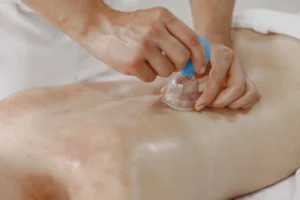
For more serious or complex presentations, the multi-therapy approach at our clinic – combining chiropractic care, dry needling, shockwave, laser, and sports massage – gets better results than any single treatment alone. The combination is designed around what the exam finds, not a protocol applied uniformly to every rider who walks in.
Frequently Asked Questions
How soon after a crash should I come in?
For soft tissue injuries without suspected fracture, earlier is better. Getting treatment within the first few days of an acute injury typically shortens the recovery timeline significantly. For injuries with suspected fracture, significant swelling, or neurological symptoms, appropriate medical evaluation comes first.
My back has been sore after rides for months. Is that normal?
Recurring post-ride back pain is a signal that something structural isn’t right – not just normal fatigue. It’s worth getting evaluated rather than continuing to manage each episode as it comes. The longer the underlying issue goes unaddressed, the more chronic the tissue changes become.
Can chiropractic help with bike fit issues or just injuries?
Both. Addressing the injury and identifying the mechanical contributors to it – including obvious bike setup issues – is part of how we approach mountain biking cases. The goal is to fix the problem and reduce the likelihood of it coming back.
If a mountain biking injury is keeping you off Durango’s trails, schedule an evaluation at our clinic or call 970-247-5519.