
That old ankle sprain, shoulder strain, or pulled hamstring that never quite went back to normal isn’t fully healed – it just stopped being acutely painful. The difference matters. When soft tissue heals poorly, it lays down disorganized scar tissue that’s weaker, less flexible, and more pain-prone than the original tissue. That’s why an injury from two years ago can still ache, stiffen up, or flare with activity. The good news is that incompletely healed injuries respond well to treatment even years later.
Why “Healed” and “Pain-Free” Aren’t the Same Thing
When you injure a muscle, tendon, or ligament, your body goes through a predictable repair sequence. First comes the inflammatory phase, where the area swells and hurts. Then the proliferative phase, where new tissue gets laid down to bridge the damage. Finally the remodeling phase, where that new tissue gradually reorganizes into something resembling the original structure.
The problem is that the remodeling phase is slow, it depends on appropriate loading to organize the tissue correctly, and it often gets cut short. Once the acute pain fades, most people stop paying attention to the injury and return to normal activity. The tissue stops hurting, so it feels healed. But underneath, the repair was never completed properly.
What’s left is scar tissue that’s structurally different from healthy tissue. Scar tissue has disorganized collagen fibers laid down in random directions rather than aligned along the lines of stress. It’s less elastic, has poorer blood supply, and doesn’t tolerate load the way the original tissue did. That’s the tissue that aches on cold mornings, stiffens after sitting, and flares when you push it.
How You Know an Old Injury Is the Culprit
There are a few recognizable patterns that point to an incompletely healed injury rather than a new problem.
The location matches an old injury, even if the current symptoms feel different. The area is stiff or restricted compared to the other side. It flares predictably with specific activities or weather changes. It never quite returns to the function it had before the original injury. And it’s been present, on and off, since the injury occurred rather than starting fresh.
In Durango, we see this constantly. The mountain biker with a shoulder that’s been “not right” since a crash three years ago. The trail runner whose ankle has never felt stable since a bad roll on the Colorado Trail. The skier with a knee that aches every winter since an old Purgatory fall. These aren’t new injuries – they’re old ones that never finished healing.
Why Scar Tissue Causes Ongoing Problems
Disorganized scar tissue creates problems beyond just the weakness at the original injury site. Because it’s less flexible, it restricts the movement of the tissue around it, creating adhesions where layers that should glide freely stick together instead. Those adhesions limit range of motion and force the surrounding tissue to compensate.
That compensation is where a lot of the downstream trouble comes from. An old ankle injury that never healed properly changes how you load the leg, which stresses the knee and hip over time. An old shoulder injury alters how you use the arm, leading to neck and upper back problems years later. The original injury becomes the hidden root cause of seemingly unrelated pain elsewhere.
How We Treat Old Injuries at Our Durango Clinic
The key to resolving an old injury is breaking down the disorganized scar tissue and stimulating the body to lay down properly aligned, functional tissue in its place. That’s something passive time can’t accomplish – the tissue has already settled into its dysfunctional state and needs an active stimulus to remodel.
Shockwave Therapy to Restart the Repair Process
This is often the centerpiece for old tendon and soft tissue injuries. Shockwave therapy delivers acoustic pressure waves that break down the disorganized scar tissue and old calcifications, stimulate new collagen production, and increase blood flow to tissue that typically has poor circulation. In effect, it restarts the healing process that stalled years ago – prompting the body to rebuild the tissue properly this time.
For old injuries with deep scar tissue or calcification, the combination of radial and focused shockwave addresses both the surface and deeper tissue layers in the same session.
Cupping and Scraping for Adhesions
The adhesions that form around old injuries – where tissue layers have stuck together – respond well to instrument-assisted soft tissue work and cupping. Scraping and cupping break down those adhesions, restore the gliding movement between tissue layers, and stimulate circulation to the restricted area. For old muscle and fascial injuries specifically, this is often what finally releases the restriction that’s been limiting movement for years.
Dry Needling for Compensatory Trigger Points
Old injuries almost always come with a layer of compensatory muscle tension and trigger points that developed over the years of altered movement. Dry needling releases those trigger points directly, addressing the secondary tension pattern that’s built up on top of the original injury.
Chiropractic Adjustments to Correct Compensation Patterns
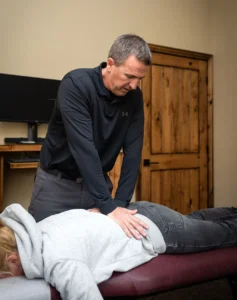
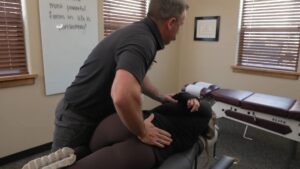
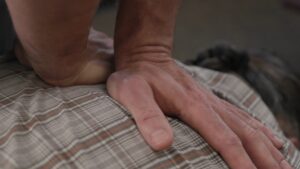
Because old injuries change how you move, the joints up and down the chain adapt to the compensation. Chiropractic adjustments restore normal mobility to the joints that have been compensating, which is essential for the overall movement pattern to normalize once the original injury is addressed. Treating the injury without correcting the compensation often leaves the downstream problems in place.
Is It Ever Too Late?
This is the question patients ask most, and the honest answer is that it’s rarely too late. Tissue remains responsive to the right stimulus regardless of how old the injury is. We’ve seen meaningful improvement in injuries that were a decade old. The timeline is generally longer for older injuries – more accumulated scar tissue and compensation to work through – but the tissue can still remodel and the compensation patterns can still be corrected.
What does change with time is the amount of downstream compensation that’s developed. An old injury that’s been altering your movement for ten years has created more secondary problems than one from last season. That’s a reason to address it sooner rather than later, not a reason to assume it’s hopeless.
Old injuries that involve the joints, tendons, and soft tissue of the arms and legs fall under the extremity pain conditions we treat regularly at our clinic.
Frequently Asked Questions
Can an injury from years ago really be fixed now?
In most cases, yes. The tissue remains responsive to treatment regardless of age. The disorganized scar tissue can be broken down and remodeled, and the compensation patterns can be corrected. The timeline is typically longer for older injuries, but meaningful improvement is realistic.
Why didn’t it heal properly in the first place?
Usually because the remodeling phase was cut short – normal activity resumed once the acute pain faded, before the tissue had reorganized properly. Inadequate initial treatment, returning to activity too soon, and the natural limits of tissue blood supply all contribute.
How long will treatment take for an old injury?
It depends on how old the injury is and how much compensation has developed. Simpler cases respond in a handful of sessions; long-standing injuries with significant downstream effects take longer. Dr. Ridgway will give you a realistic timeline after evaluating the original injury and the compensation patterns around it.
If an old injury has been quietly bothering you for years, schedule an evaluation at our Durango clinic or call 970-247-5519.