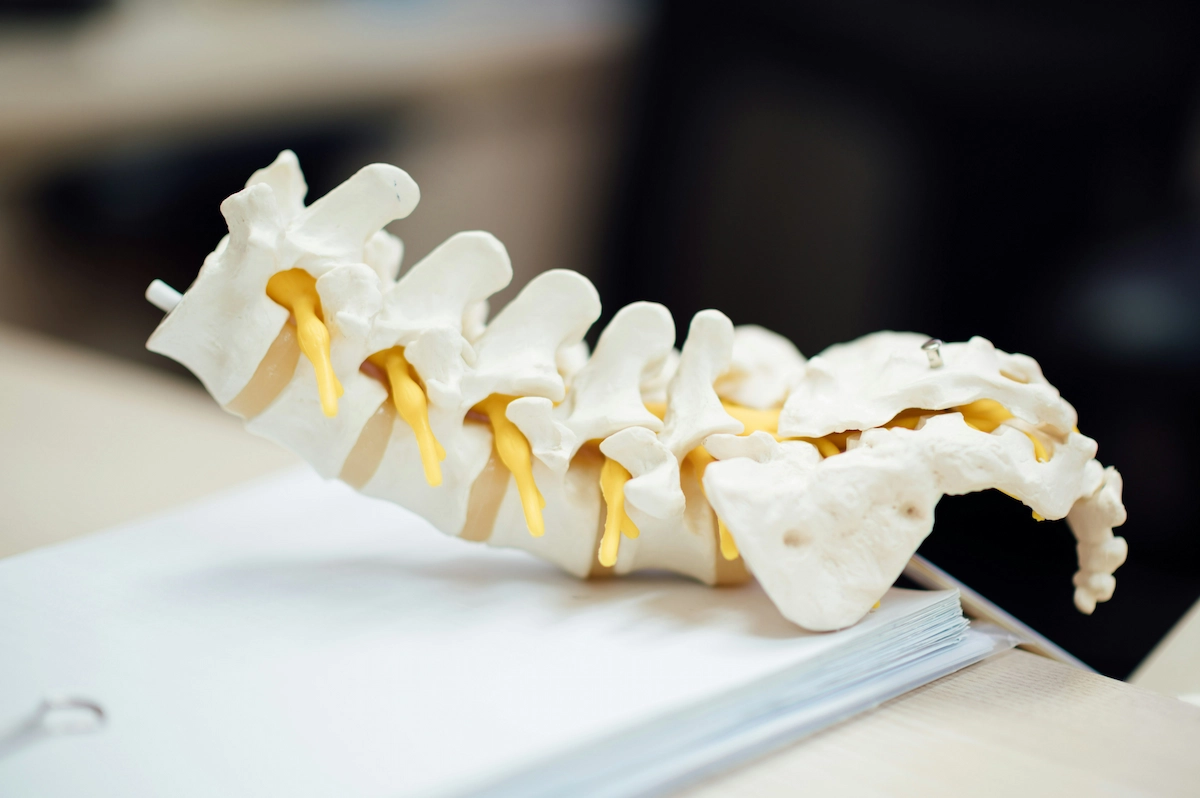
A bulging disc and a herniated disc are related but not the same thing. A bulging disc is when the disc’s outer wall weakens and pushes outward while staying intact, like a tire with a soft spot. A herniated disc is when that outer wall actually tears and the softer inner material leaks through. Herniated discs tend to cause more nerve-related symptoms, but the more important question isn’t the label – it’s whether the disc is pressing on a nerve and what that means for your treatment.
The Anatomy Behind Both
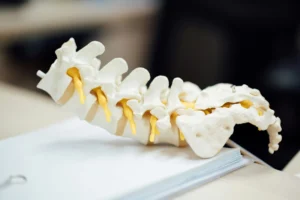
Your spinal discs sit between the vertebrae and act as cushions. Each disc has two parts: a tough, fibrous outer ring called the annulus fibrosus, and a soft, gel-like center called the nucleus pulposus. Think of it like a jelly donut – firm on the outside, soft in the middle.
Both conditions involve that structure breaking down, but to different degrees. Understanding where they sit on that spectrum makes the distinction clear.
What a Bulging Disc Is
A bulging disc happens when the outer wall of the disc weakens and the disc extends beyond its normal boundary – but the wall stays intact. Nothing has torn. The nucleus is still contained. The disc has just lost some of its firmness and is protruding outward, usually around a broad area of the disc rather than one concentrated point.
Bulging discs are extremely common and often cause no symptoms at all. They’re a normal part of aging, and many people have them without ever knowing. A bulging disc becomes a problem only when it protrudes far enough to contact or compress a nearby nerve, or when it contributes to narrowing of the spaces the nerves travel through.
What a Herniated Disc Is
A herniated disc is a step further along. Here, the outer wall actually tears, and the soft inner material pushes through the opening. This is sometimes called a ruptured or slipped disc, though nothing actually slips – the inner material herniates out through the tear.
Herniated discs are more likely to cause symptoms than bulging discs, for two reasons. First, the escaped nuclear material can directly compress a nerve root. Second, that material is chemically irritating to nerve tissue – it triggers an inflammatory response that can cause significant pain even without major physical compression. This is why herniated discs are more commonly associated with the sharp, radiating pain, numbness, and tingling of nerve involvement.
Why the Distinction Matters Less Than You’d Think
Here’s the part that surprises people. While the two conditions are structurally different, the treatment approach is often similar – because what actually matters is whether the disc is affecting a nerve, not which category it falls into.
A large bulging disc pressing firmly on a nerve root can cause more symptoms than a small herniation that isn’t touching anything. The label doesn’t determine the severity – the relationship between the disc and the surrounding nerves does. This is why an experienced clinician focuses on your actual symptoms and functional limitations rather than getting fixated on the terminology in your imaging report.
It’s also why disc findings on imaging have to be correlated with your symptoms. Plenty of people have bulging or even herniated discs on MRI with no pain at all. The finding only matters if it lines up with what you’re actually experiencing.
How Both Are Treated at Our Durango Clinic
Whether the diagnosis is a bulge or a herniation, the goal is the same: relieve the pressure and irritation on the affected nerve, support the disc’s ability to recover, and restore normal movement to the area.
Spinal Decompression
For both bulging and herniated discs that are affecting a nerve, spinal decompression with the DRX9000 is one of the most targeted non-surgical tools available. The computerized traction creates negative pressure within the disc, which helps retract the bulging or herniated material away from the nerve and draws in fluid and nutrients to support healing. Dr. Ridgway designs each decompression protocol around the specific disc level and the nature of the problem.
If you’re weighing your options for a herniated disc specifically, our post on decompression versus surgery goes deeper into that decision.
Chiropractic Adjustments and Supporting Therapies
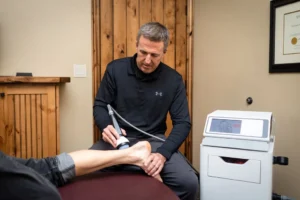
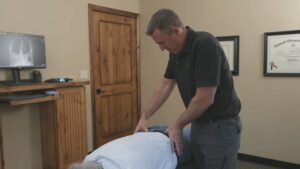
Chiropractic adjustments restore mobility to the restricted segments around the affected disc and reduce the protective muscle guarding that develops. Laser therapy addresses the inflammation – particularly relevant for herniated discs given the chemical irritation involved – and dry needling releases the muscle tension that accompanies most disc problems. The combination is tailored to your specific presentation.
You can read more about how we approach both conditions on our herniated and bulging disc page.
When to Get Evaluated
Whether you suspect a bulge or a herniation, the signs that warrant evaluation are the same: back or neck pain that radiates into a limb, numbness or tingling, weakness, or pain that isn’t improving with rest. Certain symptoms – progressive weakness, or any loss of bladder or bowel control – warrant urgent medical attention rather than routine care.
For most disc problems, though, the sensible path is a thorough evaluation to determine whether a nerve is actually involved and how to address it. The distinction between bulge and herniation will come out in that process, but it’s the nerve relationship that guides the treatment.
Frequently Asked Questions
Is a herniated disc worse than a bulging disc?
Not necessarily. A herniated disc is more likely to cause nerve symptoms because of direct compression and chemical irritation, but a large bulging disc pressing on a nerve can cause more problems than a small herniation that isn’t. Severity depends on the nerve relationship, not the label.
Can a bulging disc turn into a herniated disc?
It can. A bulging disc represents a weakened outer wall, and continued stress can eventually cause that wall to tear, resulting in a herniation. This is one reason addressing a symptomatic bulging disc rather than ignoring it is worthwhile.
Can either one heal without surgery?
Yes, in many cases. Both bulging and herniated discs frequently respond to non-surgical care including decompression, adjustments, and supporting therapies. Surgery is reserved for cases with progressive neurological deficits or those that don’t respond to a genuine trial of conservative treatment.
If you’ve been told you have a bulging or herniated disc and want to understand your options, schedule an evaluation at our Durango clinic or call 970-247-5519.