
Most back pain doesn’t require an MRI before treatment can begin, and getting one too early can actually send you down the wrong path. Imaging is genuinely valuable in specific situations – certain symptoms make it essential – but for the majority of back pain, a thorough physical exam tells a clinician what they need to know to start treating effectively. Knowing when imaging matters and when it just adds cost and delay is worth understanding before you assume you need a scan.
Why More Imaging Isn’t Always Better
It seems logical that seeing inside the spine would always help. But the research on this has been clear for years, and it points the other way for routine back pain. Studies comparing patients who got early MRIs for uncomplicated back pain against those who didn’t found that the early-imaging group didn’t recover faster – and in some cases had worse outcomes, more procedures, and higher costs.
The reason is something that surprises most people: MRIs of pain-free adults routinely show “abnormalities.” Disc bulges, degeneration, and other changes show up on the scans of people with no back pain at all, and the proportion increases with age. A significant share of healthy, symptom-free adults over 40 have disc bulges visible on MRI that aren’t causing them any trouble.
So when someone with back pain gets an MRI and it shows a disc bulge, it’s tempting to conclude “that’s the problem.” But it may be an incidental finding that was there long before the pain started and has nothing to do with the current symptoms. Treating an incidental finding rather than the actual pain source is how imaging can lead you astray.
When an MRI Genuinely Matters
None of this means imaging is useless – it’s essential in the right situations. There are specific signs and circumstances where an MRI provides information that genuinely changes the treatment approach.
Red Flag Symptoms
Certain symptoms warrant prompt imaging and medical evaluation. These include loss of bladder or bowel control, progressive weakness or numbness in the legs, numbness in the groin or inner thighs, unexplained weight loss with back pain, fever with back pain, or back pain following significant trauma. These are situations where imaging isn’t optional – it’s necessary to rule out serious conditions, and they warrant urgent attention.
Nerve Symptoms That Aren’t Improving
When back pain comes with clear nerve symptoms – pain, numbness, tingling, or weakness radiating into the leg – and those symptoms aren’t improving with a reasonable course of conservative treatment, imaging helps clarify what’s compressing the nerve and at what level. This is particularly relevant when spinal decompression is being considered, because the treatment protocol is designed around the specific disc level and the nature of the compression.
Before Certain Treatments
Some treatments genuinely need imaging to be done safely and effectively. Dr. Ridgway designs every decompression protocol around the patient’s imaging – the traction angles and settings depend on which level is involved and the direction of the disc problem. For these cases, imaging isn’t excessive caution, it’s a prerequisite for personalized treatment.
What a Good Exam Tells a Clinician Without Imaging
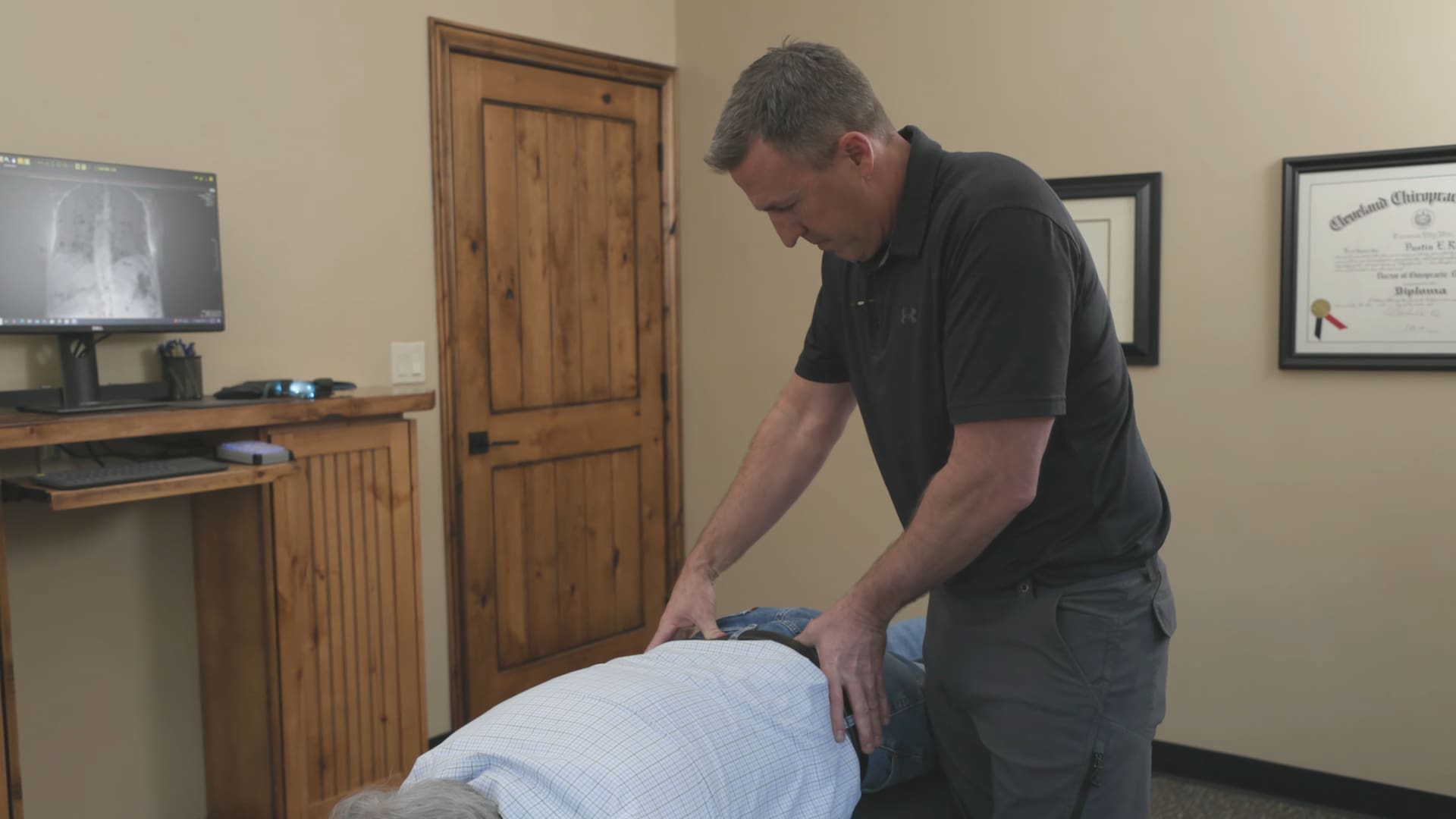
For the majority of back pain, a thorough physical examination provides the information needed to start treating effectively. A skilled exam can identify a great deal: which movements provoke and relieve the pain, whether nerve tissue is involved, where the restriction and tension are located, and what structures are most likely generating the symptoms.
Orthopedic tests, range of motion assessment, neurological screening, and hands-on palpation together build an accurate clinical picture. Dr. Ridgway’s first-visit exam is designed to determine what’s driving your pain and whether you’re a good candidate for conservative care – and crucially, to identify whether any red flags are present that would warrant imaging before proceeding.
For most mechanical back pain, that clinical picture is enough to begin treatment and to monitor whether you’re responding as expected. If you’re not improving the way the exam findings predicted, that’s itself a signal that imaging may be worth pursuing.
The Practical Cost of Imaging Too Early
Beyond the financial cost, early imaging for uncomplicated back pain carries other downsides. An incidental finding can create anxiety and a sense that something is seriously wrong when it isn’t. It can lead to a cascade of further tests and interventions chasing a finding that wasn’t the actual problem. And it can delay the start of effective conservative treatment while you wait for and process the results.
For these reasons, the sensible approach for most back pain is to start with a thorough exam and a course of appropriate conservative care, reserving imaging for the situations where it genuinely changes the plan – red flags, persistent nerve symptoms, or pre-treatment planning for procedures that require it.
How We Approach This at Our Durango Clinic
Dr. Ridgway’s approach is to evaluate first and recommend imaging when it’s actually indicated – not as a default. If your exam reveals red flags or findings that warrant a scan, he’ll tell you directly and coordinate appropriate imaging. If you already have imaging from another provider, he reviews it as part of your evaluation. And if your presentation is straightforward mechanical back pain with no red flags, he’ll start treating and monitor your response rather than sending you for a scan you don’t need.
This reflects the broader honest, no-unnecessary-intervention philosophy of the clinic. The goal is to get you the care you actually need, not to order tests for the sake of ordering them.
Frequently Asked Questions
Should I get an MRI before seeing a chiropractor?
Usually not necessary. A thorough exam determines whether imaging is needed. If you have red flag symptoms – progressive weakness, loss of bladder or bowel control, or significant trauma – seek medical evaluation promptly. Otherwise, an exam first is the sensible starting point.
If my MRI shows a disc bulge, is that definitely causing my pain?
Not necessarily. Disc bulges show up commonly on the scans of people with no pain at all, and the likelihood increases with age. A bulge on imaging may be an incidental finding rather than the source of your symptoms. Correlating imaging with the clinical exam is what determines whether a finding is actually relevant.
When would you recommend I get imaging?
When red flag symptoms are present, when nerve symptoms aren’t improving with conservative care, or when a treatment like decompression requires it for safe and personalized planning. Dr. Ridgway will recommend imaging when it genuinely changes the approach – not as a routine default.
If back pain has you wondering what you actually need, schedule an evaluation at our Durango clinic or call 970-247-5519 and start with a thorough exam.