
Many of the most durable athletes in Durango aren’t just the fittest ones. They’re the ones who treat recovery and maintenance as seriously as training. Using chiropractic care proactively, rather than only after something breaks down, helps keep joints moving well, soft tissue recovering between efforts, and small restrictions from turning into injuries. For trail runners, cyclists, and multisport athletes here, that means building chiropractic into the training cycle rather than reaching for it only when pain forces the issue.
The Difference Between Reactive and Proactive Chiropractic Care
Most people come to chiropractic care reactively. Something hurts, it’s been hurting for a while, and it’s finally bad enough to act on. That approach works, but it means you’re always playing catch-up. By the time pain is significant, the underlying problem has usually been present for weeks or months, the tissue has adapted to a compensated movement pattern, and recovery takes longer than it would have if the issue had been caught earlier.
Proactive care looks different. It’s periodic maintenance visits timed around training peaks, race seasons, and the transitions between Durango’s activity seasons. It uses the same evaluation and treatment tools to address restrictions before they become injuries: catching the hip that’s starting to lose rotation before it becomes an IT band problem, releasing neck tension building through mountain bike season before it becomes a headache pattern, and keeping the lower back moving well through a heavy hiking block so it doesn’t flare on day five of a backcountry trip.
The athletes who stay healthiest in Durango tend to understand this intuitively. They’ve seen what happens when they don’t maintain, and they’ve felt the difference when they do.
How Chiropractic Supports Endurance Training
The benefits of regular care go beyond injury prevention. Joint mobility, soft tissue health, and movement efficiency all affect how well an endurance athlete trains and recovers, and all three respond to the kind of treatment we provide.
Joint Mobility and Movement Efficiency
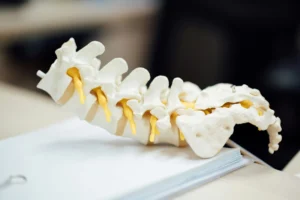
Restricted spinal and extremity joints change movement patterns in ways that can reduce efficiency and raise injury risk. A lower back segment that can’t extend fully forces the hip to compensate. A stiff mid-back limits shoulder mobility for swimmers and paddlers. Restricted ankle mobility changes how load spreads through the knee and hip while running. None of these restrictions cause immediate pain, but they make movement less efficient and more injury-prone over time.
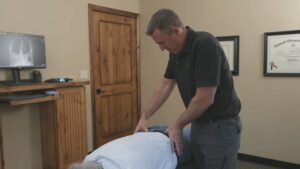
Chiropractic adjustments restore normal mobility to restricted segments so movement happens the way it’s designed to. For athletes logging high volumes, that can mean less cumulative stress on the structures that tend to break down from repetitive loading.
Soft Tissue Recovery Between Training Blocks
High-volume training creates muscle tension, trigger points, and tissue restrictions that can build faster than the body clears them between sessions. Foam rolling and stretching help, but they have a harder time reaching deeper trigger points in muscles like the iliopsoas, piriformis, subscapularis, and the deep muscles of the neck.
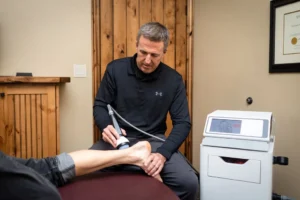
Dry needling with microvolt e-stim is a direct way to release those deeper trigger points. Used during heavy training blocks, it helps the soft tissue start each session fresher rather than carrying accumulated restriction. Many Durango athletes time needling sessions around training peaks: after a heavy week, before a key race, or during the transition between activity seasons.
Laser Therapy for Recovery
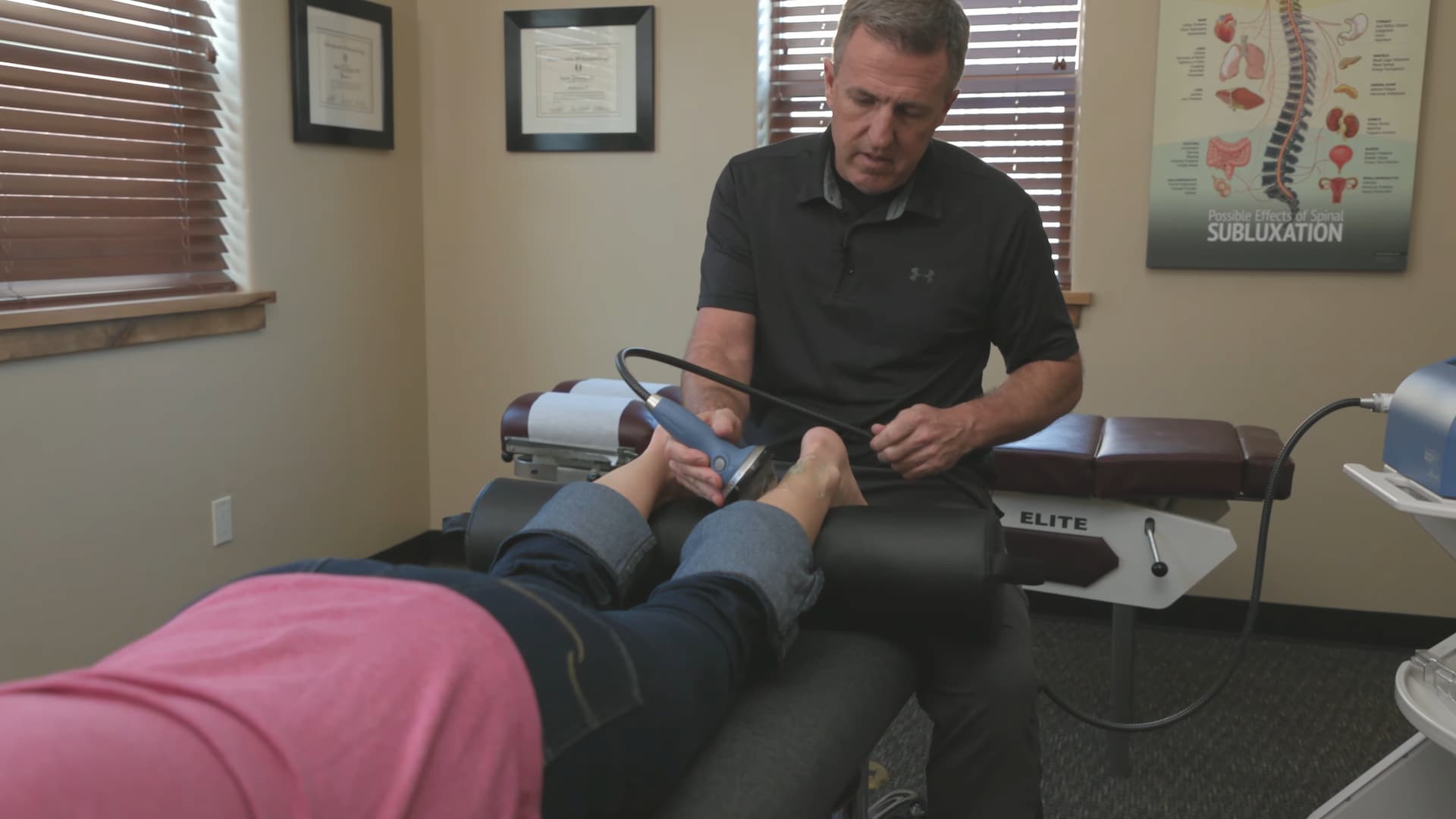
Our 30-watt Class IV K-Laser helps calm inflammation and support tissue repair, which can be useful during high-volume training. Applied to the areas carrying the most load, like knees after heavy running weeks, shoulders after paddling or climbing blocks, and ankles and Achilles during trail running season, laser therapy may help tissue recover between efforts.
Sports Massage Before and After Events
Durango’s race calendar, including the Iron Horse Bicycle Classic, the Steamworks Half Marathon, and trail and endurance events through summer and fall, gives local athletes specific targets to prepare for. Sports massage with scraping and light deep tissue work before events can help tissue feel ready, while post-event massage with cupping and deep tissue work can ease soreness after race day. For serious athletes, these are part of the preparation and recovery cycle.
Recovery Basics No Treatment Replaces
Hands-on care works best on top of a solid foundation. Sleep, enough food and fluids for your training, smart increases in volume, and regular strength training do more for recovery and injury prevention than any single treatment. We’ll talk through these as part of your plan, especially if you’re dealing with repeated injuries.
Building a Maintenance Schedule That Works
For most endurance athletes in Durango, a schedule built around the training calendar makes more sense than a fixed weekly appointment. Here’s how Dr. Ridgway typically thinks about it with active patients.
During high-volume phases, like deep into mountain bike season, peak trail running mileage, or multi-day backcountry trips, more frequent visits help manage built-up tissue stress before it becomes symptomatic. Every two to three weeks is a reasonable frequency for athletes with high training loads.
During lower-volume transition periods, like early in a new season, post-race recovery, or the shoulder seasons between winter and summer, monthly visits are often enough to keep mobility and soft tissue in good shape.
The specific frequency depends on training volume, injury history, and how you respond. Dr. Ridgway will give you an honest recommendation based on what he finds and what you’re trying to accomplish, not a standing weekly appointment that doesn’t match your needs.
What a Maintenance Visit Looks Like
A maintenance visit for a healthy, active patient is different from an injury evaluation. Dr. Ridgway does a focused assessment of how things are moving and where tension is building, addresses the findings with adjustments and soft tissue work, and gives any relevant guidance on training or home care. These visits typically take 30 to 45 minutes and are designed to keep things running smoothly rather than fix something already broken.
The goal is to find small restrictions before they become significant: the hip starting to lose range, the neck segment getting stiffer, the Achilles picking up some thickening. Addressing them early is much easier. For activity-specific guidance, see my posts on spring trail running injuries and mountain biking injuries.
When to See a Doctor First
Get medical care right away for a suspected broken bone, a joint that looks deformed, an injury you can’t put weight on, or any head injury with headache, confusion, dizziness, or vomiting. Bone pain focused in one spot, especially pain that lingers at rest or at night, can signal a stress fracture and needs evaluation.
Frequently Asked Questions
How often should an endurance athlete see a chiropractor?
It varies by training load and how you respond. Many serious endurance athletes do well with visits every two to four weeks during heavy training and monthly during lighter periods.
Is chiropractic care safe during heavy training?
Yes. Maintenance care is designed to support training, and Dr. Ridgway will work around key sessions or races where timing matters.
I only want to come in when something hurts. Is that okay?
Absolutely. Dr. Ridgway treats acute injuries and flare-ups regularly, and proactive maintenance is an option, never a requirement.
If you want to stay ahead of injuries and train harder through Durango’s seasons, schedule a visit at our clinic or call 970-247-5519 to talk through what a maintenance approach would look like for you.