The skiers and snowboarders who stay healthy all season at Purgatory aren’t just lucky – they show up prepared. Ski season puts specific demands on the hips, knees, lower back, and shoulders that most people aren’t actively addressing during the off-season. A few targeted sessions before the snow flies can make the difference between a full winter on the mountain and sitting out weeks with a preventable injury.
Why Ski Season Is Hard on Your Body
Skiing and snowboarding load the body in ways that everyday life and even summer activities don’t replicate well. The sustained hip flexion and knee bend of the athletic stance, the rotational demands of carving turns, the repeated impact absorption on hard groomers, and the unpredictable forces of powder days and terrain park features all stress structures that may have gotten tight, weak, or restricted over the summer and fall.
Add to that the reality that most skiers here in Durango go from relatively low activity levels in late fall to full ski days at Purgatory starting in December – and the body doesn’t always make that transition gracefully. The injuries we see most at our clinic in January and February are almost always connected to something that was already there before the season started: a restricted hip that couldn’t absorb a fall, a low back that had been stiff all autumn and finally gave out after a hard mogul run, a shoulder that was already compromised from mountain biking season and got pushed too far on the slopes.
What Pre-Season Preparation Actually Involves
Pre-ski prep at our Durango clinic isn’t a generic “get strong for skiing” protocol. It’s a targeted assessment of the specific areas that skiing stresses most, followed by treatment and movement work designed to address what’s actually found.
Spinal and Hip Mobility Assessment
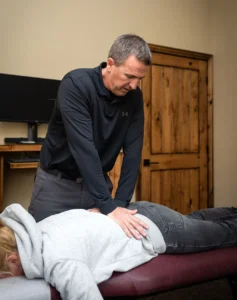
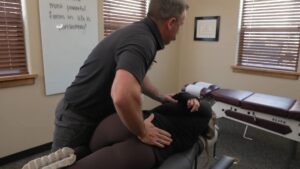
The athletic ski stance requires sustained hip flexion and neutral spinal alignment under load. If your lumbar spine is stiff, your hip flexors are short, or your thoracic spine isn’t rotating freely, the lower back compensates – and that compensation accumulates over a full ski day. Dr. Ridgway assesses joint mobility throughout the spine and hips and uses chiropractic adjustments to restore normal movement in restricted segments before that restriction becomes a problem on the mountain.
Addressing Lingering Summer Injuries
This is probably the most important piece. Mountain biking season, trail running, and hiking through the San Juan Mountains are hard on the body, and not everything heals completely before ski season starts. A partially recovered Achilles, a shoulder that’s been sore since a bike crash on Hermosa Creek, or a knee that’s been nagging since fall trail running – these don’t magically resolve over the off-season. They become ski injuries waiting to happen.
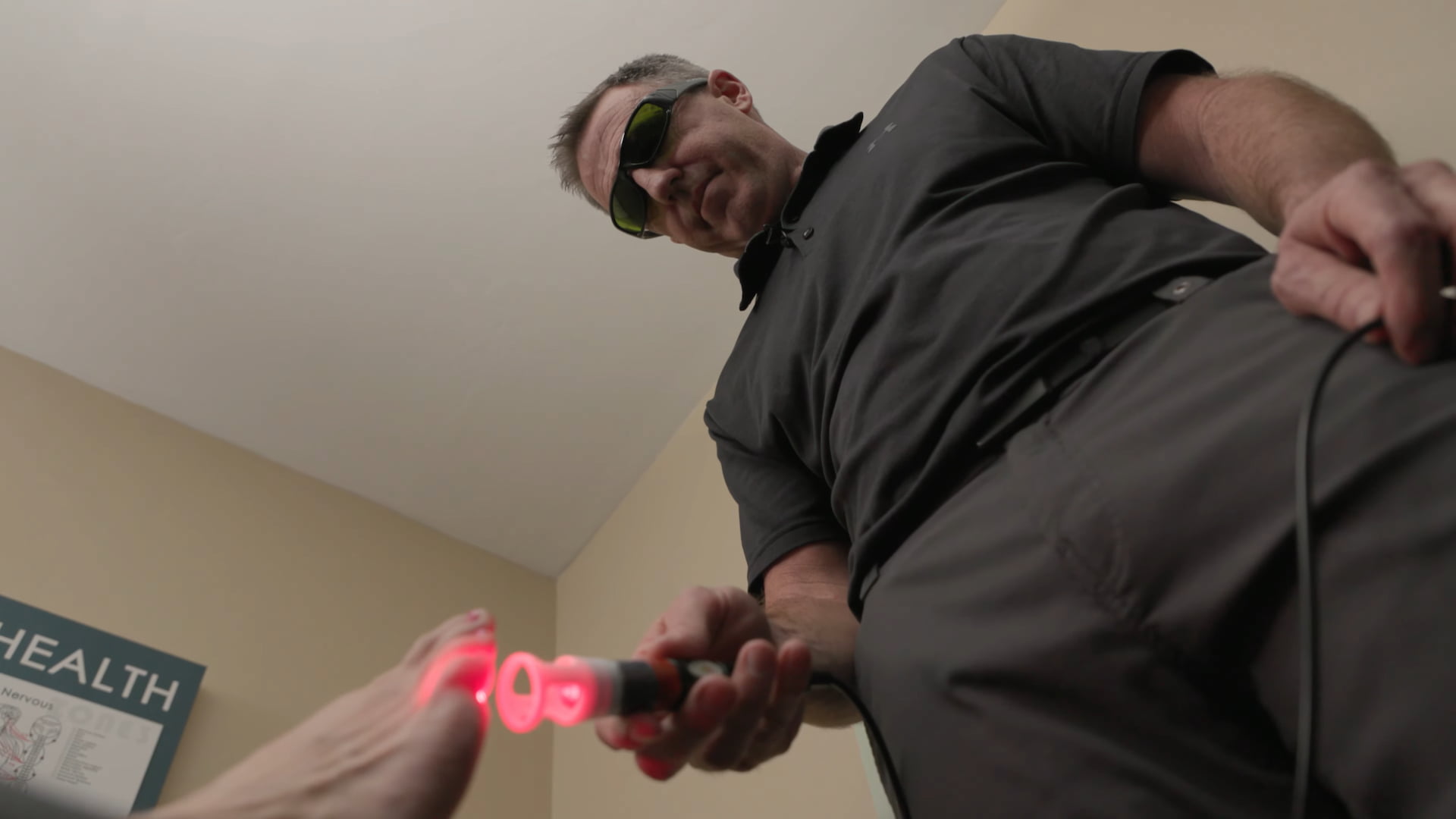
If something has been bothering you since summer, now is the time to address it properly. Shockwave therapy for tendon issues, dry needling for chronic muscle tension, and laser therapy for lingering inflammation can all resolve or significantly reduce those issues in the weeks before the season starts.
Muscle Activation and Movement Patterns
Weak glute medius, inhibited hip stabilizers, and overactive hip flexors are almost universal in people who sit for significant portions of their day – which is most people. These patterns translate directly into knee valgus (knees caving inward) under load, poor edge control, and excessive lumbar strain during mogul skiing or off-piste terrain.
Dr. Ridgway gives patients specific activation exercises to address these patterns before the season – not generic squats, but targeted movements that train the hip stabilizers and posterior chain in positions relevant to skiing. The goal is to build the muscle coordination needed to protect your joints on the mountain, not just general fitness.
The Most Common Ski Injuries We Treat in Durango
Knowing what you’re trying to prevent is helpful context for why pre-season prep matters. Here’s what shows up most at our clinic through the winter months.
Low Back Pain from Skiing
Low back pain is the most common ski-related complaint we see. The sustained flexed position of the ski stance, combined with the rotational and compressive forces of carving and impact absorption, loads the lumbar discs and facet joints repeatedly over a full ski day. For patients with existing disc issues, a hard ski day can trigger a significant flare. Back pain that develops during or after a ski day is a signal worth paying attention to early rather than pushing through.
Knee Injuries
MCL sprains, patellar tendinopathy, and occasional ACL injuries are all part of ski season at Purgatory. The knees absorb enormous force during skiing, particularly on difficult terrain and in fall situations. Good hip stability and adequate quad and hamstring strength reduce knee injury risk significantly – which is why the activation work matters as much as the joint mobility work.
Shoulder Injuries
Shoulder injuries in skiers come from two mechanisms: falls onto an outstretched arm and pole planting under load. AC joint sprains, rotator cuff strains, and shoulder dislocations are all on the list. Having the shoulder evaluated and any existing rotator cuff issues addressed before the season reduces the risk of a minor shoulder problem becoming a major one.
Hip Flexor and Groin Strains
The hip flexors work hard in the ski stance and are often chronically tight in people who sit for work. Early season hip flexor strains are common when activity ramps up suddenly. Pre-season dry needling and stretching protocols for the hip flexors and adductors help prevent these.
What to Do If You’re Already Injured
If ski season is already underway and something has gone wrong, early treatment gives you the best chance of getting back on the mountain quickly. The approach depends on what’s injured – a lumbar flare from a hard day on the moguls responds differently than an Achilles strain from boot fit issues – but the principle is the same: address it early, use the right combination of therapies, and don’t push through to the point where a minor injury becomes a season-ending one.
For muscle-based injuries, sports massage and dry needling accelerate recovery. For tendon and soft tissue injuries, shockwave and laser are the primary tools. For spine-related flare-ups, adjustments and decompression where appropriate get you back to function faster than rest alone.
Timing Your Pre-Season Visit
Ideally, a pre-ski evaluation happens 4-6 weeks before you plan to start skiing. That window gives enough time to address any issues that show up – a tight hip, a shoulder that needs a few shockwave sessions, a lumbar spine that needs some work – before the season demands that your body perform.
If you’re reading this closer to opening day at Purgatory, even a single evaluation visit is worth doing. Knowing what’s stiff, what’s weak, and what’s carrying an old injury going into the season is valuable information – and some things can be addressed quickly.
Frequently Asked Questions
I haven’t skied in a few years. Do I need a pre-season visit even if I’m starting slow?
Especially then. Coming back to skiing after a break means your body is encountering those movement patterns and loading demands fresh. An evaluation is a smart way to identify any mobility or strength gaps before they become problems on the mountain.
Can you treat a ski injury the same week it happens?
Yes. For acute injuries, earlier is better. Dr. Ridgway will assess what happened and recommend the appropriate treatment approach. For severe injuries with suspected fracture or ligament rupture, appropriate imaging and medical evaluation come first – and he’ll refer you accordingly.
Is there anything I should be doing on my own before the season?
Wall sits, single-leg squats, and lateral band walks for hip stability are a good start. But the specific exercises that matter most depend on your individual movement patterns – which is why an evaluation is more useful than a generic pre-ski workout list.
Ready to head into ski season in Durango feeling prepared rather than hoping for the best? Schedule a pre-season visit or call us at 970-247-5519.