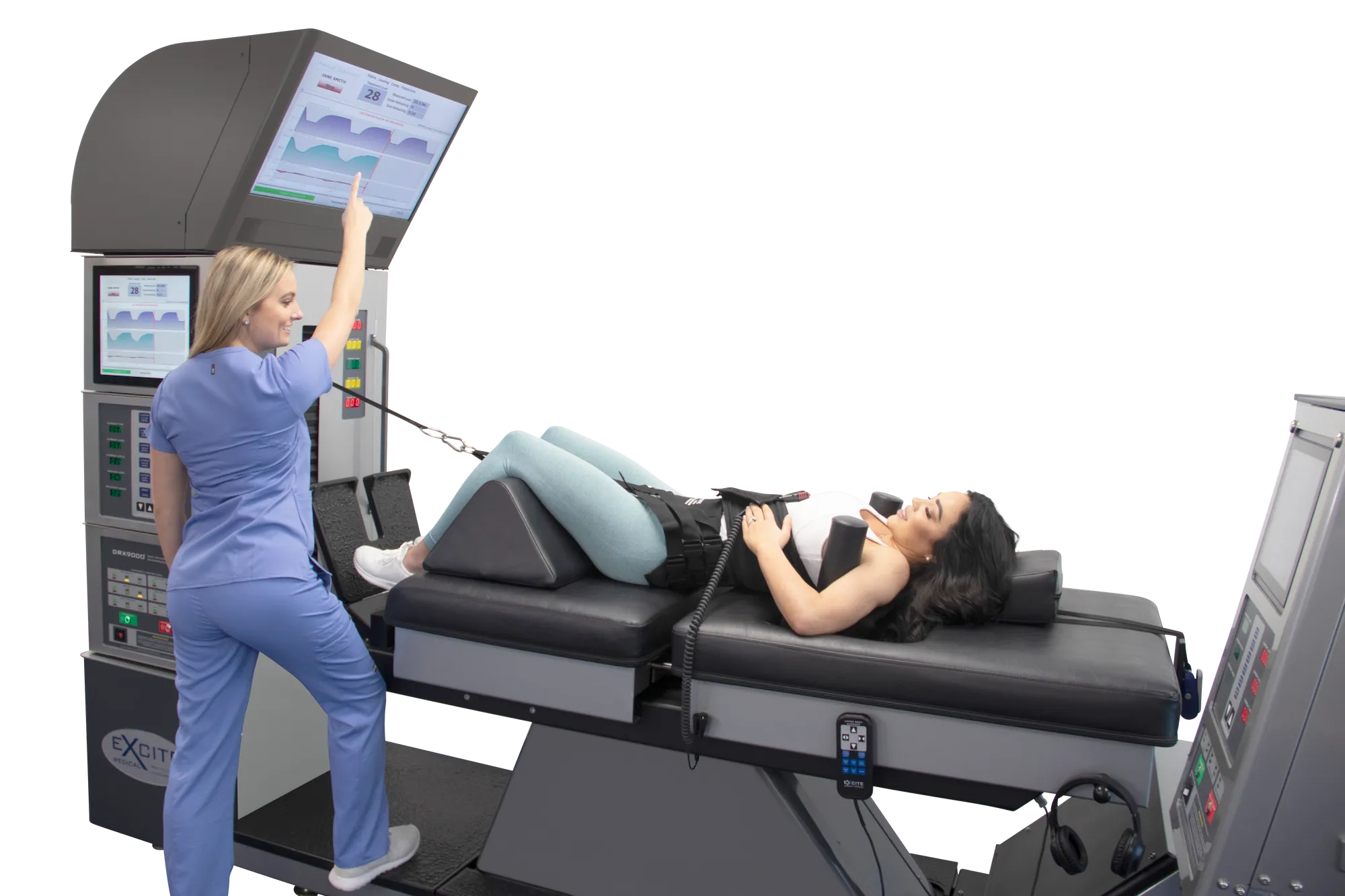
Durango doesn’t attract the kind of people who sit still. Between the mountain biking trails on Hermosa Creek, the ski runs at Purgatory, the backpacking routes into the Weminuche, and the daily grind of jobs that actually require your body to work – this town puts real demands on your spine. When a disc finally gives out, the idea of surgery or months on the sidelines isn’t just inconvenient. For most people here, it’s unacceptable. That’s exactly why spinal decompression therapy with the DRX9000 has become one of the most sought-after treatments at Durango Chiropractic Associates.
Your Disc Problem Has a Mechanical Solution
Most people with herniated or bulging discs are told some version of the same story: rest, anti-inflammatories, maybe physical therapy, and if that doesn’t work, surgery. What’s rarely explained is why the disc is painful in the first place – and why that mechanical problem has a mechanical solution.
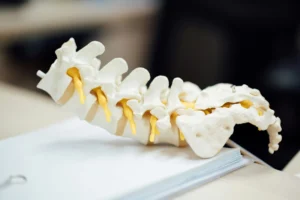
Spinal discs sit between your vertebrae and act as shock absorbers. When one herniates or bulges, it presses against nearby nerves, causing the radiating pain, numbness, and weakness that make everyday movement miserable. The disc doesn’t have a direct blood supply, which is part of why they heal slowly. What they do respond to is pressure change.
Spinal decompression therapy works by gently distracting the vertebrae on either side of the damaged disc, creating a brief window of negative pressure inside the disc space. That negative pressure pulls the disc material away from the nerve and draws fluid and nutrients back into the tissue – giving the disc what it needs to actually heal, not just feel temporarily better.
What the DRX9000 Does That Basic Traction Can’t
There’s a meaningful difference between spinal decompression and old-school traction, and it’s worth understanding before you assume you’ve already tried this.
Basic traction pulls in a straight line at a fixed force. The problem is that your muscles immediately sense the tension and contract to protect the spine – which defeats the purpose entirely. The DRX9000 uses real-time biofeedback to monitor that muscle response and modulate the pull accordingly, cycling through distraction and relaxation phases in a way that keeps your muscles from guarding. The result is genuine decompression of the disc rather than a tug-of-war your body wins every time.
The system also allows Dr. Ridgway to program the exact angle of distraction based on which disc level is involved. L4-L5 and L5-S1 – the two most common problem areas in active adults – require different positioning to target effectively. That precision is what separates a medical-grade system from a generic table.
How Dr. Ridgway Builds Your Protocol
Before your first session, Dr. Ridgway reviews your X-rays, maps your symptom pattern, and determines the specific parameters your treatment requires – the angle of pull, the distraction force, and the cycle timing based on your anatomy and your diagnosis. This isn’t a default setting applied the same way to every patient. It’s a protocol built around your spine.
As treatment progresses, those parameters are adjusted based on how your body responds. Some patients tolerate more force as their symptoms settle. Others need modifications depending on what they’re feeling between sessions. Dr. Ridgway tracks your progress throughout the full protocol – not just at the intake visit – and makes changes when the clinical picture calls for it.
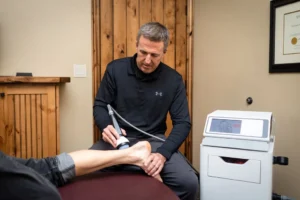
For patients dealing with muscle guarding, nerve inflammation, or upper back tension that’s affecting treatment, Dr. Ridgway often pairs decompression with laser therapy or dry needling to get more out of each session. The combination approach is particularly effective for patients whose muscles are so protective that decompression alone can’t do its full job.
Who Responds Best to Spinal Decompression
Decompression therapy works best for specific presentations. Patients who tend to see the strongest results include those with:
- Herniated or bulging discs in the lumbar or cervical spine
- Sciatica and radiating leg pain
- Degenerative disc disease
- Facet syndrome
- Chronic back or neck pain that hasn’t responded to other conservative care
It’s not the right fit for every case. Patients with certain spinal hardware, fractures, or advanced osteoporosis may not be candidates. Dr. Ridgway will tell you honestly whether decompression makes sense for your situation – and if it doesn’t, he’ll tell you that too.
What a Typical Session Looks Like
You’ll be positioned on the DRX9000 table fully clothed, with a harness system securing you in place. The machine begins a slow, controlled distraction based on your programmed settings. Most patients describe the sensation as a gentle, rhythmic stretch. It’s not uncomfortable – in fact, a lot of people find it relaxing enough to doze off.
Sessions run around 30 minutes. A full course of treatment typically spans several weeks, with visit frequency tapering as your symptoms improve. Some patients notice meaningful relief within the first few sessions. Others with longer-standing disc problems take more time to respond, which is normal given how slowly disc tissue heals. The goal isn’t just pain relief during treatment – it’s structural improvement that holds up when you’re back on the trail.
A Real Alternative to Surgery
For Durango residents who’ve been told surgery is their only remaining option, that’s worth questioning before committing. Disc surgery carries real risks – infection, scar tissue formation, failed outcomes, and in some cases the need for additional procedures. Recovery timelines are measured in months, not weeks.
Spinal decompression with the DRX9000 addresses the same mechanical problem without those risks. It won’t be the right answer for every case, and there are disc conditions that do require surgical intervention. But for the right patient – someone with a herniated or degenerative disc who hasn’t yet found lasting relief through conservative care – it offers a legitimate path forward that doesn’t involve an operating room.
Frequently Asked Questions
How many sessions will I need?
Most protocols run between 12-20 sessions over several weeks depending on your diagnosis and how your body responds early in treatment.
Can decompression be combined with chiropractic adjustments?
Yes – and the combination often works better than either alone. Decompression reduces disc pressure first, which tends to make adjustments more comfortable and more effective. Dr. Ridgway sequences both in the same visit when appropriate.
What if I’ve already had back surgery?
It depends on the type of surgery and your current spinal structure. Some post-surgical patients are good candidates; others aren’t. Dr. Ridgway will review your history and imaging before making any recommendation.
Find Out If the DRX9000 Is Right for You
If disc pain has been keeping you off Durango’s trails, slopes, or out of the activities that make living here worthwhile, we’d be glad to take a look and give you an honest answer about whether spinal decompression makes sense for your situation. Call us at 970-247-5519 or schedule an appointment online and we’ll get you in for an evaluation.