Neck pain is one of the most common reasons people come into our Durango clinic, and it’s also one of the most mismanaged conditions in general healthcare. The standard approach – rest, anti-inflammatories, maybe a referral to physical therapy – helps some patients and leaves a lot of others stuck with the same problem months later. The reason is that neck pain rarely has a single cause, and when the treatment doesn’t match what’s actually driving the symptoms, you get temporary relief at best.
Why Neck Pain Is More Complicated Than It Looks
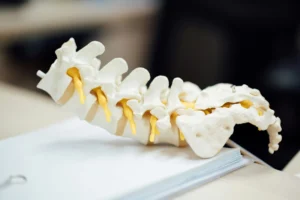
The cervical spine is doing a lot of simultaneous jobs. It supports the weight of your head (roughly 10-12 pounds at neutral, significantly more as your head drifts forward), allows complex multi-directional movement, and protects the spinal cord and nerve roots that feed sensation and motor function into your arms and hands.
When something goes wrong in that system, the pain signal is often straightforward, but the cause can be coming from several places at once. A restricted cervical joint may be the primary problem. Or there may be trigger points in the levator scapulae and upper trapezius that are referring pain upward. Or the disc between C5 and C6 may be putting pressure on a nerve root. Or the problem may be a combination of all three.
Treating only one of those when all three are present is why patients end up frustrated after doing “everything right” and still hurting.
What We See Most Often in Durango Neck Pain Patients
Durango has a mix of office workers, outdoor athletes, construction workers, and everything in between – and neck pain patterns vary by lifestyle.
Tech neck from sustained screen use is common in office workers and remote workers. The head drifts forward, the lower cervical spine compresses, and the upper cervical joints become restricted over time. It develops slowly and is easy to dismiss until the pain becomes impossible to ignore.
Cyclists and mountain bikers – and Durango has no shortage of those – develop neck pain from the sustained extension position required to look up the trail from an aggressive riding position. Hours in that posture, repeated over hundreds of rides, creates predictable patterns of restriction and muscle overload in the mid-cervical spine.
Skiers and snowboarders coming down from Purgatory sometimes add a whiplash-type mechanism from falls. And hikers carrying significant weight in the San Juan Mountains load the cervical spine through the trapezius and levator scapulae in ways that create their own issues.
Why Adjustments Alone Often Aren’t Enough
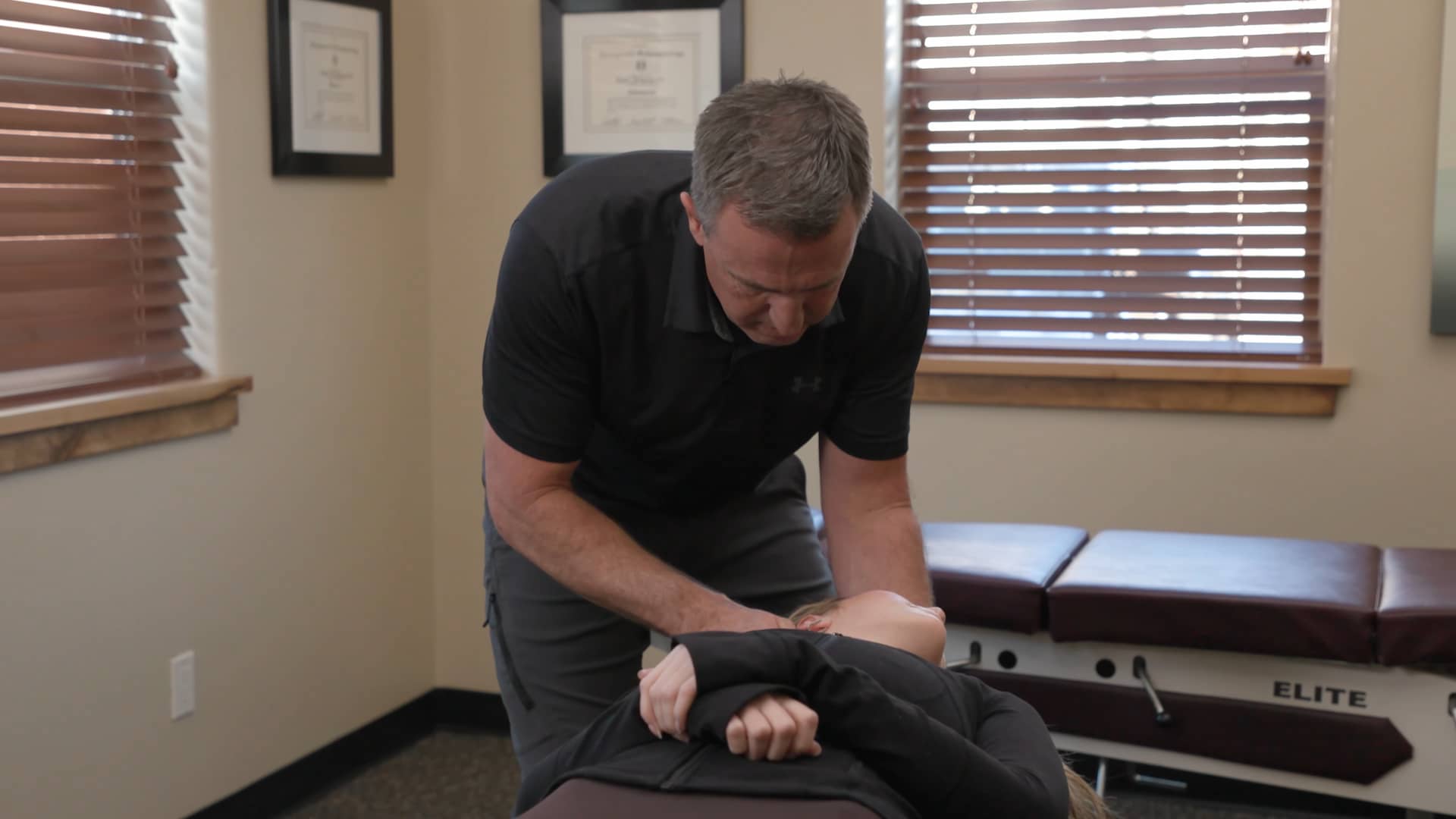
Chiropractic adjustments are highly effective for cervical joint restriction. Restoring normal mobility to restricted segments relieves the local pain and stiffness most patients associate with neck pain. But they have limits.
Adjustments don’t directly resolve trigger points in the surrounding musculature. They don’t address disc-related nerve compression the way decompression does. And they don’t accelerate tissue healing in inflamed or damaged soft tissue the way laser therapy can. When those components are part of the picture – which they often are in chronic or complex neck pain cases – relying on adjustments alone leaves part of the problem untreated.
This is why we approach neck pain with a multi-therapy framework at our Durango clinic. The combination we use depends on what’s actually found in the exam, not a default protocol applied to everyone who walks in with neck pain.
Adding Dry Needling to the Mix
Trigger points in the upper trapezius, levator scapulae, suboccipital muscles, and sternocleidomastoid are extremely common in patients with chronic neck pain, and they’re one of the main reasons adjustments alone produce inconsistent results. These tight, hypersensitive spots in the muscle tissue refer pain and restrict movement even when the joints themselves are moving better after an adjustment.
Dry needling with microvolt electrical stimulation targets those trigger points directly. The e-stim component enhances the trigger point response and produces more complete muscle relaxation than mechanical needling alone. For patients whose neck pain comes with chronic tension headaches, cervical needling combined with adjustments often produces noticeably better outcomes than either approach by itself.
Dr. Ridgway has been offering dry needling since 2006 and holds an advanced certification in integrated dry needling. That depth of experience matters when you’re needling in the cervical region.
When Laser Therapy Helps
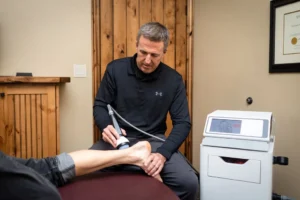
For neck pain with a significant inflammatory component – recent-onset pain, acute flare-ups of a chronic condition, or cases where nerve irritation is involved – our 30-watt Class IV K-Laser reduces inflammation and supports tissue repair at the cellular level. It’s applied with a handheld device and patients typically feel gentle warmth. No injections, no medication.
Laser therapy is particularly useful in the first few visits when pain levels are high enough that adjustments alone are uncomfortable, or when there’s peripheral nerve involvement – like tingling or numbness running into the arm – that benefits from the laser’s effect on nerve tissue inflammation.
When the Disc Is Involved
Cervical disc herniations and bulging discs are a specific subset of neck pain that comes with its own treatment considerations. When disc pressure is compressing a nerve root, the symptoms extend beyond local neck pain – you get referred pain, tingling, numbness, or weakness into the shoulder, arm, or hand.
For these presentations, cervical spinal decompression using the DRX9000 is often the most targeted intervention available without surgery. The system applies carefully calibrated traction at specific angles to create negative pressure within the disc, which helps retract the herniated material and relieve nerve compression. Dr. Ridgway personally designs each patient’s decompression protocol based on their imaging and symptom pattern.
Dry needling and decompression work well together for cervical disc cases specifically – needling reduces the muscle guarding in the neck that can make decompression sessions less effective, allowing the traction to work through a more relaxed tissue environment.
Posture Correction as Part of Long-Term Care
Treating the acute pain without addressing the posture and movement patterns that caused it is how people end up back in the same situation six months later. Forward head posture – where the head sits forward of the shoulders rather than stacked over them – is one of the most consistent findings in chronic neck pain patients, and it doesn’t correct itself.
As part of any neck pain care plan, Dr. Ridgway incorporates posture correction work and specific exercises to strengthen the deep cervical flexors and improve thoracic mobility. These aren’t generic exercises – they’re chosen based on what the exam reveals about your specific postural pattern and movement deficits.
You can read more about the conditions we address on our neck pain treatment page.
Frequently Asked Questions
How long does it usually take to resolve chronic neck pain?
It depends on how long the problem has been present and what’s driving it. Simple mechanical neck pain from a recent onset often responds well in 4-8 visits. Chronic cases with disc involvement or significant muscle guarding take longer – typically 8-12 visits. Dr. Ridgway will give you a realistic timeline after the first exam.
Is cracking the neck safe?
Cervical adjustments performed by a trained chiropractor are considered safe and effective for appropriate patients. Dr. Ridgway screens carefully before performing any cervical manipulation, and he uses instrument-assisted techniques for patients who prefer no manual adjustment or whose presentation calls for a lower-force approach.
My neck pain comes with headaches. Is that related?
Very likely, yes. Cervicogenic headaches originate from the upper cervical spine and the musculature around it. They’re commonly mistaken for tension or stress headaches, but they respond well to chiropractic care targeting the cervical spine. Read more about how we treat headaches and migraines in Durango.
If neck pain has been slowing you down – whether on the trail, at your desk, or just getting through the day – it’s worth getting it properly evaluated. Schedule a visit at our Durango clinic or call 970-247-5519.