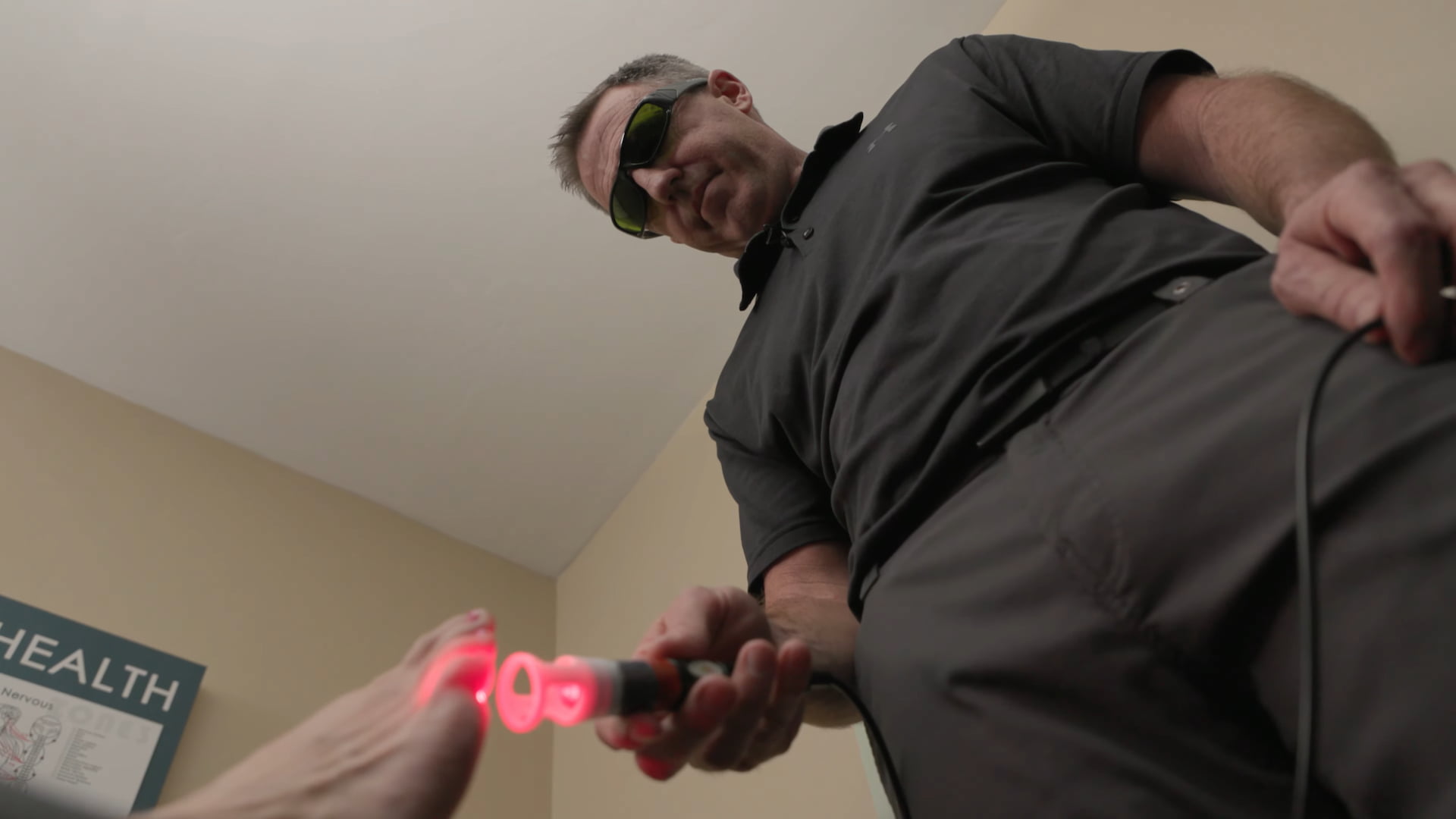
Peripheral neuropathy – the tingling, numbness, or burning pain in the hands and feet – is one of the more frustrating conditions to live with, partly because most conventional treatment options focus on managing the symptoms rather than addressing what’s happening in the nerve tissue itself. Class IV laser therapy works differently. By stimulating cellular repair directly in the affected nerves and surrounding tissue, it gives the body a real mechanism for recovery rather than just masking the signals.
What Peripheral Neuropathy Actually Is
Peripheral neuropathy is damage or dysfunction of the peripheral nerves – the nerves outside the brain and spinal cord that carry signals to and from your extremities. When those nerves are damaged or not functioning properly, the signals they send get distorted. That’s where the tingling, burning, numbness, and sometimes sharp pain comes from.
The causes vary. Diabetes is the most common driver. But we also see neuropathy from chemotherapy side effects, chronic compression (like carpal tunnel), circulatory problems, and in some cases from no clearly identified cause at all. Older active adults in Durango dealing with years of demanding physical activity sometimes develop neuropathy symptoms that are partly circulatory and partly nerve-related.
Whatever the cause, the underlying problem is usually the same: nerves that aren’t getting adequate blood flow and aren’t able to repair themselves effectively.
How Class IV Laser Therapy Helps
Our 30-watt K-Laser Cube Plus 30 is a high-powered Class IV laser, and the wattage matters here. Lower-wattage laser devices – Class III or lower-powered Class IV units – don’t penetrate deep enough to reach the peripheral nerves effectively. At 30 watts, our laser reaches the tissue depth where the nerve damage actually is.
Here’s what happens at the cellular level during a laser therapy session: the light energy is absorbed by the mitochondria in nerve cells and surrounding tissue. That absorption triggers what’s called photobiomodulation – a chain of cellular events that increases ATP production (cellular energy), stimulates the formation of new blood vessels, reduces inflammation, and accelerates tissue repair.
In practical terms, that means better circulation to damaged nerves, reduced pain signaling, and a cellular environment that supports actual nerve repair over time – not just symptom suppression.
What Laser Therapy for Neuropathy Feels Like
Sessions are straightforward. A handheld device is moved slowly over the affected area – typically the feet and lower legs for patients with diabetic or peripheral neuropathy. Most patients feel a gentle, comfortable warmth during the session. There’s no pain, no injections, no recovery time needed afterward.
Sessions typically run 8-15 minutes depending on the area being treated. Patients usually come in 2-3 times per week in the early stages of treatment and then taper down as symptoms improve.
Results are gradual. Most patients start noticing changes – reduced tingling, better sensation, less burning at night – within several weeks of consistent treatment. Some see faster improvement, some slower, depending on how long the neuropathy has been present and what’s driving it. We’re honest about expectations from the start.
Who Is a Good Candidate
Laser therapy for neuropathy tends to work best for patients who still have some functional nerve tissue remaining – meaning the neuropathy hasn’t progressed to complete numbness with no sensation at all. The earlier in the neuropathy progression treatment begins, the better the response tends to be.
Good candidates often include:
- Diabetic patients with peripheral neuropathy in the feet
- Post-chemotherapy neuropathy affecting the hands or feet
- Patients with chronic numbness or tingling that hasn’t responded well to medication
- Older active adults dealing with circulatory and nerve-related foot symptoms
- Patients with extremity pain or burning from nerve compression or chronic inflammation
Laser therapy is not a fit for every neuropathy patient. If there’s an active underlying condition that needs to be better managed first – like uncontrolled blood sugar – we’ll talk through that honestly. We’d rather set realistic expectations than oversell what any single treatment can do.
Combining Laser with Other Therapies
For neuropathy patients who also have a structural component – compression in the lumbar spine contributing to nerve symptoms in the legs, for example – laser therapy works best as part of a broader plan.
We often combine laser with spinal decompression when there’s a disc or nerve root compression component alongside the peripheral neuropathy. We might also incorporate chiropractic adjustments to optimize spinal alignment and reduce any central nerve irritation contributing to the symptoms in the extremities.
The combination approach tends to produce better outcomes than treating any one layer in isolation – which is true across most of the conditions we treat, not just neuropathy.
A Note on Laser Wattage
If you’ve tried laser therapy elsewhere and didn’t get much out of it, wattage may be part of the explanation. Many clinics use Class III cold laser or lower-powered Class IV devices. There’s a significant difference in tissue penetration between a 5-watt laser and a 30-watt laser. For superficial conditions, lower-powered devices may be sufficient. For peripheral neuropathy – where you need to reach deep into the foot, calf, or hand tissue – power matters.
We’ve been certified in Class IV laser since 2007. The 30-watt K-Laser we use is one of the more capable units available for this kind of treatment. That’s not to say it works for everyone, but it does mean we’re working with a tool that’s actually capable of reaching the tissue depth that neuropathy treatment requires.
Taking the Next Step
If you’re dealing with peripheral neuropathy symptoms in Durango and want to understand whether laser therapy might be appropriate for your situation, we’re happy to have that conversation. There’s no pressure to commit to a treatment plan at the first visit – we’d rather you leave with a clear picture of what’s going on and what the realistic options are.
Call us at 970-247-5519 or book an appointment online to get started.